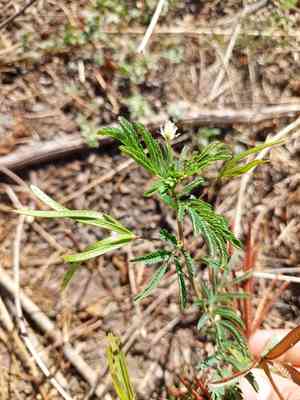
Wild tantan(Desmanthus virgatus)

Wild tantan (Desmanthus virgatus)

Also known as: Virgate mimosa, Prostrate bundleflower

Wild tantan (Desmanthus virgatus) is a perennial shrub reaching up to 1-2 meters in height. Often found growing wild, it can be regarded as a weed in certain regions. The plant features delicate, feathery leaves reminiscent of the mimosa tree and blooms from spring to summer with small, white or pale pink flowers arranged in spherical clusters.

**Key Characteristics:**
- Hardy and drought-resistant.
- Nitrogen-fixing, enhancing soil fertility.
- Adaptable to various soil types, including poor and saline soils.
- Attracts pollinators such as bees.

**Optimal Growing Conditions:**
- Prefers full sun but can also tolerate partial shade.
- Thrives in well-drained soils, including sandy, loamy, and clay soils.
- Requires minimal watering once established.
- Suited to warm climates with temperatures between 20-35°C (68-95°F).

This versatile plant is often used for purposes such as soil stabilization, fodder, and green manure.

Attributes of Wild tantan

Lifespan
Perennial
Plant Type
Herb, Shrub
Plant Height
1.5 m to 3 m
Spread
1-1.5 meters
Leaf Color
Green
Flower Size
5 mm
Flower Color
White Yellow

ForwardPlant - Identify plants with a snap

Identify and diagnose plants, get toxicity alerts, and explore safety guides for all types of fungi.

Try for Free

Images of Wild tantan

Wild tantan(Desmanthus virgatus)

Quickly Identify Wild tantan

1
Identify Desmanthus virgatus by its bipinnate leaves with small, oval leaflets. The plant produces small, white spherical flowers which develop into long, slender pods.

Scientific Classification of Wild tantan

Phylum
Vascular plants
Class
Dicotyledons
Order
Fabales
Family
Legume
Genus
Bundleflowers
Species
Wild tantan

Planting and Growing of Wild tantan

Care Difficulty
Easy
Watering Schedule
Every 2 days
Sunlight Requirements
Full sun
Sunshine Duration
4-8 hours
Ideal Temperature
75-85℉
Soil Type
Potting Mix, Peat Mix
Soil pH
5.5-8
Fertilizer Type
Balanced
Pruning Season
Spring, Summer
Pruning Area
Branches, Leaves
Pruning Frequency
2 times a year
Repotting Season
Spring
Pot Type
Plastic, Ceramic

water icon How to Water Wild tantan?

Desmanthus virgatus requires a moderate amount of water, around 500 ml each time. Water the plant until the soil is evenly moist but not waterlogged, ensuring that excess water drains away to prevent root rot.
What are the symptoms of an underwatered Wild tantan?
What should I do if my Wild tantan is not getting enough water?
What are the symptoms of an overwatered Wild tantan?
How to save an overwatered Wild tantan?

sunlight icon What Are the Sunlight Requirements for Wild tantan?

Sunlight Requirements: Full sun, Partial sun
Duration of light: 6 to 8 hours
Desmanthus virgatus performs best under full to partial sun conditions. Ideal lighting bolsters its flowering potential, maintains lush foliage, and invigorates growth.
What is the best light condition?
How can I achieve ideal lighting?
What benefits does ideal lighting offer?

temperature icon What Is the Ideal Temperature Range for Wild tantan?

Ideal Temperature: 75 ~ 85℉
The ideal temperature range for growing Desmanthus virgatus is between 75°F to 85°F. This range provides the optimal conditions for growth, ensuring that the plant can perform photosynthesis efficiently. Consistent temperatures in this range help the plant maintain good health and encourage vibrant foliage and blooms.

soil icon What Soil is Best for Wild tantan?

Soil type: Sandy soil, Loam, Sandy loam
Soil PH: 5.5 ~ 8
Desmanthus virgatus thrives best in nutrient-rich soils that provide an adequate supply of nitrogen. This boosts the plant's growth rate and overall health, resulting in lush foliage and vibrant flowering. Ensuring the soil drains well is crucial for Desmanthus virgatus as it prevents root rot and other water-related diseases. A well-draining condition ensures the roots can access oxygen efficiently, promoting vigorous growth. Though the plant appreciates moisture, the soil should not retain excessive water. Moderate moisture levels prevent the roots from drowning while maintaining necessary hydration for uninterrupted growth.

fertilize icon How to Fertilize Wild tantan?

Fertilizer type: Balanced
Desmanthus virgatus benefits from a balanced approach in fertilization. Use a general-purpose, balanced fertilizer with an NPK ratio of 10-10-10 or similar. For liquid fertilizers, apply at a concentration of 1 tablespoon per gallon of water to avoid root burn and ensure healthy growth.

prune icon How to Prune Wild tantan?

Pruning Time: Spring, Summer, Autumn, Winter
Focus on removing dead, damaged, or diseased branches. Also, cut back any overcrowded or inward-growing branches to improve light penetration and air flow. Trim back excessive growth and shape the plant by cutting just above a leaf node. This encourages new shoots and maintains a neat, compact form. More About Pruning Techniques

propagate icon How to Propagate Wild tantan plant?

Propagate Time: Spring, Early summer
1
To prepare Desmanthus virgatus seeds for germination, soak them in warm water for 12-24 hours to soften the seed coat and promote faster sprouting.
2
Sow the soaked seeds in a seed tray filled with moist, well-draining soil and cover them lightly, keeping the tray in a warm, bright location until germination.
3
Select healthy, non-flowering stems of about 10-15 cm length for cuttings, removing the lower leaves and treating the cut ends with rooting hormone to enhance root development.
More About Propagating Techniques

repot icon How to Repot Wild tantan plant?

Repotting frequency: Once every 2 years
1
You should consider repotting Desmanthus virgatus when you notice signs such as roots emerging from the drainage holes, stunted growth, or the soil drying out faster than usual. These indicators suggest that the plant has outgrown its current pot and needs more space for healthy root development.
2
Select a pot that is slightly larger than the current one, preferably 1-2 inches wider in diameter. This ensures enough space for root growth without overwhelming the plant with excessive soil, which can retain too much moisture and lead to root rot.
3
Opt for well-draining, sandy soil to mimic the plant’s natural environment. This soil type prevents waterlogging and ensures proper aeration, benefiting root health and overall plant growth by reducing the risk of fungal infections.

ForwardPlant - Identify plants with a snap

Find the best spots for them to optimize their health, simply using your phone.

Try for Free