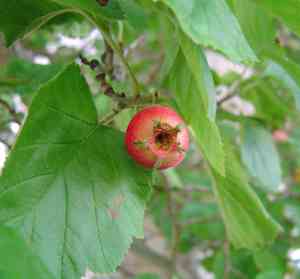
Downy hawthorn (Crataegus mollis)
Also known as: Many-stemmed cockspurthorn
Crataegus mollis, in contrast to Crataegus submollis, which has around 10 stamens, typically features about 20 stamens per flower. These two species are related but have distinct native ranges.
In This Article
Attributes of Downy hawthorn
Lifespan
Perennial
Plant Type
Tree, Shrub
Plant Height
6 m to 12 m
Spread
6 m to 12 m
Leaf Color
Green
Flower Size
2.5 cm to 8 cm
Flower Color
White
Images of Downy hawthorn
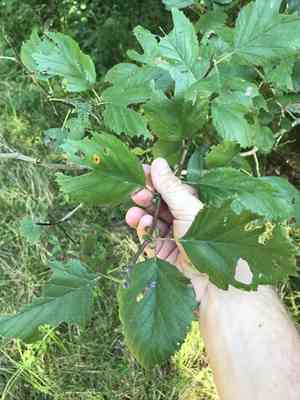
Quickly Identify Downy hawthorn
1
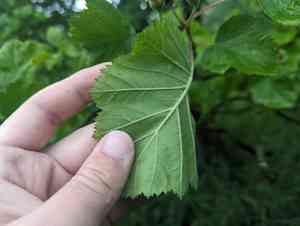
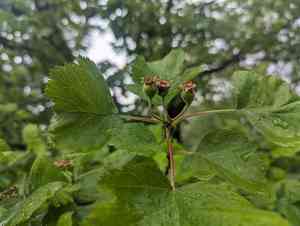
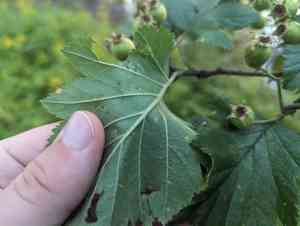
Large, broad hairy leaves, 2-5 inches (5-12.7 cm) long, with prominent veins.
2
Profuse clusters of white, rose-like flowers emitting an unpleasant odor for pollination.
3
Small, red apple-like fruit, 0.5-1 inch (1.3-2.5 cm), tart with brown seeds.
4
Zig-zag stem pattern, soft and fuzzy texture, light gray to brown, 0.25-0.5 inches (0.6-1.3 cm).
5
Silvery bark that scales and breaks into narrow, rough-textured layers on thick trunk.
Scientific Classification of Downy hawthorn
Phylum
Vascular plants
Class
Dicotyledons
Order
Rosales
Family
Rose
Genus
Hawthorns
Species
Downy hawthorn
Planting and Growing of Downy hawthorn
Care Difficulty
Easy
Watering Schedule
Every 2 days
Sunlight Requirements
Full sun
Sunshine Duration
6-8 hours
Ideal Temperature
60-75℉
Soil Type
Potting Mix, Peat Mix
Soil pH
6.5-7.5
Fertilizer Type
Balanced
Pruning Season
Spring, Summer
Pruning Area
Branches, Leaves
Pruning Frequency
2 times a year
Repotting Season
Spring
Pot Type
Plastic, Ceramic
 How to Water Downy hawthorn?
For Crataegus mollis, ensure the soil is moist but not waterlogged. Water deeply with around 1000 milliliters each time to sustain its robust root system. It's crucial to allow the topsoil to dry between waterings to prevent root rot.
What are the symptoms of an underwatered Downy hawthorn?
›
What should I do if my Downy hawthorn is not getting enough water?
›
What are the symptoms of an overwatered Downy hawthorn?
›
How to save an overwatered Downy hawthorn?
›
 What Are the Sunlight Requirements for Downy hawthorn?
Crataegus mollis prefers full sun to partial sun, ideally receiving between 6 to 8 hours of sunlight daily. This light range supports healthy growth, encourages abundant flowering, and helps in warding off diseases and pests.
How much full sun is ideal?
›
What if I can't provide full sun conditions?
›
What's the advantage of getting ideal sunlight?
›
 What Is the Ideal Temperature Range for Downy hawthorn?
Crataegus mollis grows best in an ideal temperature range of 60°F to 75°F. This range ensures optimal biochemical processes, promoting healthy growth and flowering. Providing consistent temperatures within this range helps avoid stress and ensure vibrant foliage.
 What Soil is Best for Downy hawthorn?
Crataegus mollis thrives in well-draining soil, ensuring that excess water does not pool around the roots. This prevents root rot and promotes healthy root development, leading to a robust plant. Rich, fertile soil provides essential nutrients that support the vigorous growth of Crataegus mollis. Fertile soils contribute to lush foliage and abundant flowering, making your hawthorn attractive and healthy. While well-draining, the soil should also have the ability to retain necessary moisture. This balance helps maintain consistent hydration, crucial for the plant's growth, especially during drier spells.
 How to Fertilize Downy hawthorn?
For Crataegus mollis, apply a balanced liquid fertilizer at a concentration of about half the recommended strength for general plants. Each feeding should consist of approximately 1 to 2 liters per plant, ensuring the soil is adequately moist without oversaturation.
 How to Prune Downy hawthorn?
Always sanitize your pruning tools before you start to prevent the spread of disease. Use a solution of one part bleach to nine parts water or rubbing alcohol. Sanitizing takes only a few minutes and greatly reduces the risk of infection and disease. When making cuts, do so just above a bud facing outward or a branch junction. Make clean, smooth cuts to help the plant heal more quickly and to prevent disease entry. Use sharp tools for precision and to minimize damage to the tree. Aim for an open, vase-like shape for the tree, which allows light to reach the center of the plant. Regular shaping can ensure the structural integrity of the tree and prolong its lifespan by preventing overcrowding of branches. Avoid excessive removal of leaves and branches as this can reduce the tree's ability to photosynthesize effectively. Remove no more than 25% of the canopy in any given year unless there is a severe problem with the tree's health or structure.
More About Pruning Techniques→
 How to Propagate Downy hawthorn plant?
1
Gather mature hawthorn fruits from the tree in late autumn. Extract the seeds by mashing the berries and washing away the pulp. Allow the seeds to dry before storing or planting.
2
Take semi-hardwood cuttings from the current year's growth, ideally in late spring. Trim to a length of about 4-6 inches, making sure to cut below a node and remove the lower leaves.
3
Choose a healthy rootstock and a compatible scion. Carefully join them with the aid of grafting tape or wax to prevent moisture loss and encourage the formation of a successful graft union.
 How to Repot Downy hawthorn plant?
1
Crataegus mollis, commonly known as Downy Hawthorn, demands repotting when roots visibly circle the pot's edges and growth appears stunted. Best repot during growth spurts in spring or early summer when the plant is in an active growing phase, allowing it to quickly establish in the new soil environment.
2
Select a pot that's just one size larger than its current vessel to avoid waterlogging. Ensure it has drainage holes to prevent root rot. A ceramic or terracotta pot works well as they provide breathability, which Crataegus mollis appreciates for healthy root development.
3
Opt for a well-draining loamy soil mix enriched with organic matter. This composition aids in aeration and moisture retention, essential for the Downy Hawthorn’s root system, ensuring it doesn't sit in waterlogged soil, which could stunt its growth or cause root diseases.



