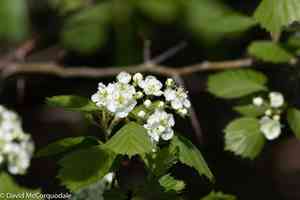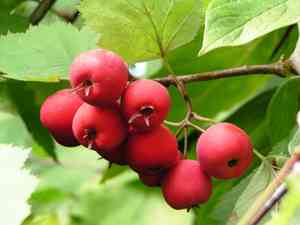
Fireberry hawthorn(Crataegus chrysocarpa)

Fireberry hawthorn (Crataegus chrysocarpa)

Also known as: Goldenberry Hawthorn

The plant you're referring to is likely the Fireberry hawthorn (Crataegus chrysocarpa). It’s known for its striking red fruit and can reach heights of up to 9 meters. This plant blooms with clusters of fragrant white flowers from spring to summer. Its fruit, which resembles small apples, turns red in the fall, complementing the foliage as it shifts from green to yellow. Fireberry hawthorn thrives in full sunlight and adapts well to various soil types.

Attributes of Fireberry hawthorn

Lifespan
Perennial
Plant Type
Tree, Shrub
Plant Height
6 m
Spread
4 m
Leaf Color
Glossy green in the summer and yellow to red in the fall
Flower Size
1.5 cm to 2 cm
Flower Color
White

ForwardPlant - Identify plants with a snap

Identify and diagnose plants, get toxicity alerts, and explore safety guides for all types of fungi.

Try for Free

Images of Fireberry hawthorn

Fireberry hawthorn(Crataegus chrysocarpa)

Quickly Identify Fireberry hawthorn

1
This plant can be identified by its white flowers with five petals, glossy green leaves with serrated edges, and distinctive golden to red pome fruits. The bark is usually gray and has a scaly texture.

Scientific Classification of Fireberry hawthorn

Phylum
Vascular plants
Class
Dicotyledons
Order
Rosales
Family
Rose
Genus
Hawthorns
Species
Fireberry hawthorn

Planting and Growing of Fireberry hawthorn

Care Difficulty
Easy
Watering Schedule
Every 2 days
Sunlight Requirements
Full sun
Sunshine Duration
6-10 hours
Ideal Temperature
60-75℉
Soil Type
Potting Mix, Peat Mix
Soil pH
6.5-7.5
Fertilizer Type
Balanced
Pruning Season
Spring, Summer
Pruning Area
Branches, Leaves
Pruning Frequency
2 times a year
Repotting Season
Spring
Pot Type
Plastic, Ceramic

water icon How to Water Fireberry hawthorn?

For Crataegus chrysocarpa, ensure the soil is sufficiently moist by watering until it feels damp approximately two inches deep. Typically, provide around 500 milliliters per session, adjusting as needed based on environmental conditions and soil drainage.
What are the symptoms of an underwatered Fireberry hawthorn?
What should I do if my Fireberry hawthorn is not getting enough water?
What are the symptoms of an overwatered Fireberry hawthorn?
How to save an overwatered Fireberry hawthorn?

sunlight icon What Are the Sunlight Requirements for Fireberry hawthorn?

Sunlight Requirements: Full sun
Duration of light: 6-8 hours daily
Crataegus chrysocarpa thrives in full sunlight, needing about 6 to 8 hours of direct sun daily. Proper light exposure promotes healthy growth, vibrant leaves, and robust blooming, crucial for its development.
What is the ideal light intensity for Crataegus chrysocarpa?
How to achieve optimal lighting if direct sunlight is limited?
What are the benefits of providing optimal lighting conditions?
More About Sunlight Requirements Techniques

temperature icon What Is the Ideal Temperature Range for Fireberry hawthorn?

Ideal Temperature: 60 ~ 75℉
The ideal temperature range for Crataegus chrysocarpa is between 60°F and 75°F. This range ensures optimal growth and health, as it mimics the natural conditions the plant requires. Maintaining this temperature range supports the plant's metabolic processes, ensuring that photosynthesis and nutrient uptake occur efficiently.

soil icon What Soil is Best for Fireberry hawthorn?

Soil type: Loam, Sandy loam
Soil PH: 6.5 ~ 7.5
Crataegus chrysocarpa prefers well-drained soil which helps prevent root rot. This feature ensures that the roots receive adequate oxygen, preventing waterlogging and encouraging healthy growth. While it can tolerate some drought, moderate moisture levels help Crataegus chrysocarpa thrive. This balance ensures that the plant gets enough water to sustain growth without risking water-related diseases. This plant thrives in nutrient-rich substrates which provide essential nutrients for robust growth. Good fertility in soil supports healthy foliage and fruit production, enhancing ornamental and ecological value.

fertilize icon How to Fertilize Fireberry hawthorn?

Fertilizer type: Balanced
For Crataegus chrysocarpa, appropriate fertilization is vital for healthy growth. Use a balanced, complete fertilizer such as a 10-10-10 formula. When using liquid fertilizer, mix at a rate of one tablespoon per gallon of water. For slow-release fertilizers, sprinkle approximately 2 pounds per 100 square feet around the base, ensuring it extends to the drip line.

prune icon How to Prune Fireberry hawthorn?

Pruning Time: Spring, Summer, Autumn
Begin by removing any dead, damaged, or crossing branches. This will improve air circulation and reduce the risk of disease. Use clean, sharp pruning tools to make clean cuts, as this will help the plant heal more quickly. Focus on maintaining a balanced shape by selectively removing branches from areas of overcrowding. If you're aiming to reduce the plant's height, cut back the primary leader branch to encourage more lateral growth. This species is known for its thorny branches, so wearing protective gloves is advisable. More About Pruning Techniques

propagate icon How to Propagate Fireberry hawthorn plant?

Propagate Time: Spring, Early spring
1
Collect ripe fruits from Crataegus chrysocarpa in the fall. Separate seeds from the pulp by mashing and rinsing them in water. Stratify seeds by chilling them for 3 to 4 months to simulate winter conditions and improve germination rates.
2
Take semi-hardwood cuttings in early spring. Cut sections 6-8 inches long, just below a node. Remove the leaves from the lower half and dip the cut end in rooting hormone before planting in a well-draining potting mix.
3
In early spring, select healthy rootstock and scion wood. Make a clean diagonal cut on both. Align the cambium layers of the rootstock and scion and secure them with grafting tape. Ensure the graft is kept moist until it heals.
More About Propagating Techniques

repot icon How to Repot Fireberry hawthorn plant?

Repotting frequency: Every 2-3 years
1
Repot Crataegus chrysocarpa when you notice the roots growing out of the drainage holes, the soil drying out too quickly, or the plant becoming top-heavy and unstable. Spring is the ideal time to do so as it’s when plants are ready to grow after winter dormancy.
2
Select a pot that is one size larger than the current one with ample drainage holes. This helps prevent overwatering and root rot, allowing the roots to spread comfortably, thus promoting healthy plant growth.
3
Choose a well-draining, loamy soil mix for repotting. This type of soil retains necessary moisture while providing adequate aeration, ensuring roots don't suffocate and reducing the risk of fungal infections.

ForwardPlant - Identify plants with a snap

Find the best spots for them to optimize their health, simply using your phone.

Try for Free

Toxicity of Fireberry hawthorn

Is Fireberry hawthorn toxic to humans?

Fireberry hawthorn presents a slight toxicity risk to humans primarily through the consumption of its seeds. These seeds contain hydrogen cyanide, a compound recognized for its potential to induce poisoning. Upon ingestion, the body metabolizes these seeds, releasing hydrogen cyanide and resulting in symptoms such as headache, dizziness, confusion, and possibly breathing difficulties. The severity of these symptoms may vary based on the quantity consumed. It is essential for individuals, particularly those who may be foraging or eating the fruit of fireberry hawthorn, to refrain from consuming the seeds in order to avert accidental poisoning. The remainder of the plant does not exhibit any known toxicity risks and is generally not linked to adverse outcomes when handled or consumed.

Is Fireberry hawthorn toxic to cat?

The fireberry hawthorn plant exhibits a low degree of toxicity to felines. Incidents of poisoning in cats usually arise when they unintentionally ingest portions of the plant. The seeds of the fireberry hawthorn carry harmful compounds, such as hydrogen cyanide, which can threaten health. Upon ingestion, a cat may show symptoms of physical discomfort or agitation. Prompt intervention is essential if a cat consumes any part of the fireberry hawthorn; pet owners are highly recommended to seek veterinary care to safeguard the cat's health and address any possible medical issues effectively.

Is Fireberry hawthorn toxic to dog?

The fireberry hawthorn presents a mild toxicity hazard to dogs. Canines might inadvertently consume parts of the plant, especially the seeds, which harbor toxic compounds. If a dog ingests these seeds, it may display signs such as labored breathing, excessive panting, or lethargy. Therefore, it is vital for dog owners to supervise their pets closely and restrict their access to fireberry hawthorn. Should poisoning be suspected, prompt veterinary care is critical to safeguard the health of the impacted animal.

Identify toxic plants for your safety

Learn which plants are harmful to you and your pets, and make informed choices for a safer home!

Try for Free
WARNING
The judgment on toxicity and danger is for reference only. We DO NOT GUARANTEE any accuracy of such judgment. Therefore, you SHALL NOT rely on such judgment. It is IMPORTANT TO SEEK PROFESSIONAL ADVICE in advance when necessary.
More About Toxic Techniques