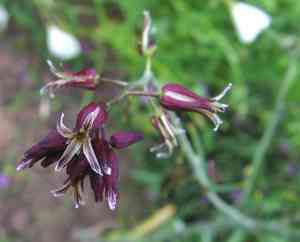
San diego wild cabbage (Caulanthus heterophyllus)
Also known as: Varied-leaf Jewelflower
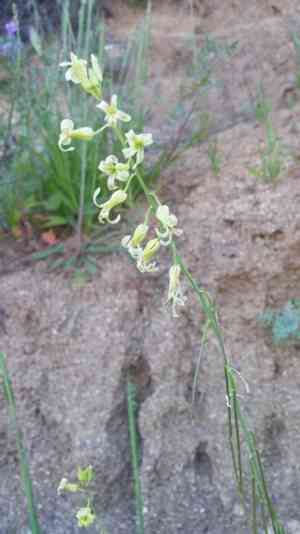
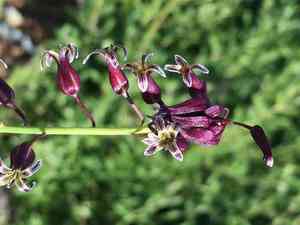
San Diego wild cabbage, a notable wildflower, is commonly located in the dry environments of Southern California, such as chaparral and coastal sage scrub. It features slender, branching stems adorned with small, yellow flowers that may have a subtle purple tint. This plant is well-adapted to arid conditions, with its leaves varying from broad to narrow forms, helping it conserve water efficiently. The presence of elongated seedpods is another distinctive characteristic, contributing to its ability to endure and thrive in harsh, rocky soils and a Mediterranean climate.
In This Article
Attributes of San diego wild cabbage
Lifespan
Annual
Plant Type
Herb
Plant Height
12-36 inches
Spread
N/A
Leaf Color
Green
Flower Size
0.5-1 inches
Flower Color
Yellow to Purple
Images of San diego wild cabbage

Quickly Identify San diego wild cabbage
1
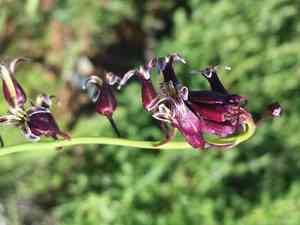
Caulanthus heterophyllus can be identified by its tall, slender stems and its small flowers, which range from yellow to purple. The leaves are variably shaped, contributing to its name.
Scientific Classification of San diego wild cabbage
Phylum
Vascular plants
Class
Dicotyledons
Order
Brassicales
Family
Cruciferae
Genus
Wild cabbage
Species
San diego wild cabbage
Planting and Growing of San diego wild cabbage
Care Difficulty
Hard
Watering Schedule
Every 2 days
Sunlight Requirements
Full sun
Sunshine Duration
6-10 hours
Ideal Temperature
60-80℉
Soil Type
Potting Mix, Peat Mix
Soil pH
6.5-7.5
Fertilizer Type
Balanced
Pruning Season
Spring, Summer
Pruning Area
Branches, Leaves
Pruning Frequency
2 times a year
Repotting Season
Spring
Pot Type
Plastic, Ceramic
 How to Water San diego wild cabbage?
Caulanthus heterophyllus, a desert-native plant, requires careful watering. You should water around 150ml per session, ensuring the soil is moist but not waterlogged. The goal is to mimic its natural arid habitat while providing enough moisture for growth without causing root rot.
What are the symptoms of an underwatered San diego wild cabbage?
›
What should I do if my San diego wild cabbage is not getting enough water?
›
What are the symptoms of an overwatered San diego wild cabbage?
›
How to save an overwatered San diego wild cabbage?
›
 What Are the Sunlight Requirements for San diego wild cabbage?
Caulanthus heterophyllus thrives best in full sun but can adapt to partial sun environments, benefiting from the extended light period for enhanced photosynthesis, leading to healthier foliage and prolific blooming, maximizing its ornamental potential.
What is the ideal light level for Caulanthus heterophyllus?
›
How to achieve ideal lighting conditions for Caulanthus heterophyllus?
›
What benefits arise from ideal lighting for Caulanthus heterophyllus?
›
 What Is the Ideal Temperature Range for San diego wild cabbage?
The ideal temperature range for growing Caulanthus heterophyllus is between 60°F and 80°F. This range provides an optimal environment that supports healthy growth and development of the plant. Within this temperature window, important physiological processes such as photosynthesis, respiration, and transpiration occur effectively, ensuring that the plant maintains its vigor and vitality.
 What Soil is Best for San diego wild cabbage?
Caulanthus heterophyllus thrives in well-drained soil, which prevents waterlogging and root rot, ensuring the roots receive adequate air and nutrients. This condition emulates the plant's natural habitat, promoting healthy growth. The plant benefits from a nutrient-rich soil that supplies essential minerals, enhancing vigor and bloom quality. Organic matter, such as compost, can be mixed into the soil to boost fertility and structure, supporting robust plant development. A slightly acidic to neutral pH range of 6.5 to 7.5 is ideal for Caulanthus heterophyllus. This pH range optimizes nutrient availability, ensuring the plant can absorb vital elements necessary for its growth and overall health.
 How to Fertilize San diego wild cabbage?
Caulanthus heterophyllus, known for its unique foliage, benefits from a balanced fertilization approach. Use a diluted liquid fertilizer at half the recommended strength; for solid fertilizers, apply granules sparingly, ensuring even distribution around the plant base.
 How to Prune San diego wild cabbage?
Before embarking on the pruning process of Caulanthus heterophyllus, ensure you have sharp, sterilized tools. This minimizes plant stress and wards off potential infections. Tools like pruning shears or sharp scissors are ideal, as they ensure a clean cut that promotes rapid healing. Carefully inspect your plant to identify weak, dead, or overcrowded stems. These can be detrimental to your plant's health, as they may constrict growth and airflow. By selectively removing these stems, you allow the plant to flourish and maintain a sprightly appearance. With precision, make your cuts at 45-degree angles just above a bud or node. This encourages new growth and helps water run off, preventing rot. Be deliberate with your cuts; less is often more, as excessive pruning can weaken the plant.
More About Pruning Techniques→
 How to Propagate San diego wild cabbage plant?
1
Begin preparation by choosing a well-draining soil mix, enriched with organic matter to provide nutrients. Ensure the soil is slightly moist to support germination and that it is free from any contaminants.
2
Scatter the seeds evenly across the surface of the prepared soil, lightly covering them with a thin layer of additional soil. Do not bury the seeds too deeply, as they require light to germinate effectively.
3
Select healthy stems, and cut them at a 45-degree angle. Dip the cut end into rooting hormone before placing the cutting into a pot with moist soil. Maintain high humidity to encourage root growth.
 How to Repot San diego wild cabbage plant?
1
Look for signs like roots growing out of the drainage holes, slow growth, or the soil drying out too quickly. These indicators suggest it's time to repot Caulanthus heterophyllus to ensure healthy development.
2
Select a pot that is 1-2 inches bigger in diameter than the current one. Ensure it has good drainage holes to prevent waterlogging, which can harm the plant's roots. A slightly larger pot provides space for root expansion and promotes healthier growth.
3
Opt for a well-draining sandy soil mix, rich in organic matter, to support nutrient uptake and prevent root rot. This type of soil mimics the plant's natural habitat, providing essential drainage and aeration.
Learn More About San diego wild cabbage Diseases
Bacterial Leaf Spot
Bacterial Soft Rot
Clubroot
Crown Gall
Cyst Nematode
Damping-off
Downy Mildew
Drought Stress
Fusarium Wilt
Gray Mold
Leaf Curl
Leaf Spot
Mosaic
Nutrient Deficiency
Nutrient Toxicity
Powdery Mildew
Root Rot
Root-knot Nematode
Rusts
Sooty Mold
Spider Mites
Temperature Stress
Thrips Damage
White Mold
Chemical Injury



