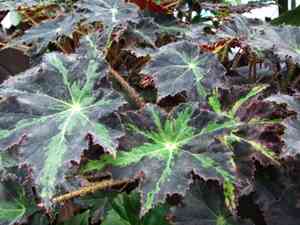
Starleaf begonia (Begonia heracleifolia)
Also known as: Palm Leaf Begonia, Hand-Leaf Begonia
The Starleaf begonia stands out to gardeners during winter due to its striking, star-shaped foliage that adds a splash of color when most plants are dormant. It also produces an abundance of pink-white flowers in winter, enhancing its appeal and providing a burst of color to indoor spaces or sheltered patios. Additionally, its drought tolerance and ability to thrive in lower light conditions make it a resilient and low-maintenance choice for winter gardening.
In This Article
Attributes of Starleaf begonia
Lifespan
Perennial
Plant Type
Herb
Plant Height
46 cm
Spread
90 cm
Leaf Color
Green Red
Flower Size
1-2 cm
Flower Color
White Pink
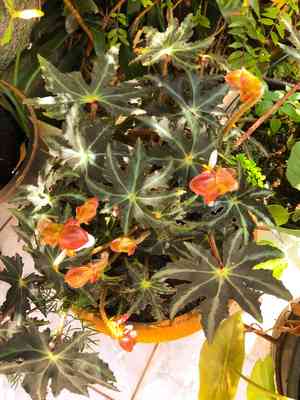
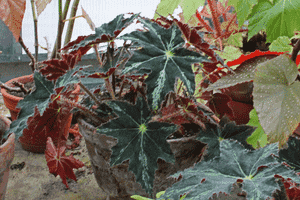
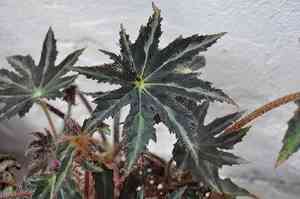
Images of Starleaf begonia
Quickly Identify Starleaf begonia
1
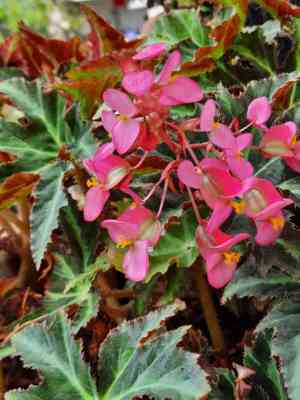
Identifying Begonia heracleifolia involves looking at its distinct hand-shaped, deeply lobed leaves, which have a characteristic palmate structure. The leaves are usually vibrant green and sometimes have reddish undersides. The plant may also produce small clusters of pink or white flowers.
Scientific Classification of Starleaf begonia
Phylum
Vascular plants
Class
Dicotyledons
Order
Cucurbitales
Family
Begonia
Genus
Begonias
Species
Starleaf begonia
Planting and Growing of Starleaf begonia
Care Difficulty
Easy
Watering Schedule
Every 3 days
Sunlight Requirements
Partial sun
Sunshine Duration
4-8 hours
Ideal Temperature
65-75℉
Soil Type
Potting Mix, Peat Mix
Soil pH
6.5-7.5
Fertilizer Type
Balanced
Pruning Season
Spring, Summer
Pruning Area
Branches, Leaves
Pruning Frequency
2 times a year
Repotting Season
Spring
Pot Type
Plastic, Ceramic
 How to Water Starleaf begonia?
The watering amount for Begonia heracleifolia should be 250 ml per session, ensuring the soil is evenly moist but never waterlogged. It's essential to allow the top layer of soil to dry out before the next watering to prevent root rot.
What are the symptoms of an underwatered Starleaf begonia?
›
What should I do if my Starleaf begonia is not getting enough water?
›
What are the symptoms of an overwatered Starleaf begonia?
›
How to save an overwatered Starleaf begonia?
›
 What Are the Sunlight Requirements for Starleaf begonia?
Begonia heracleifolia prospers in partial sun to full shade conditions. Proper lighting ensures robust growth, vibrant leaf colors, and consistent flowering, while protecting it from environmental stressors.
More About Sunlight Requirements Techniques→
What is the ideal light intensity for Begonia heracleifolia?
›
How should I position Begonia heracleifolia for optimal growth?
›
What are the benefits of providing ideal lighting conditions?
›
 What Is the Ideal Temperature Range for Starleaf begonia?
The ideal temperature range for Begonia heracleifolia growth is between 65°F and 75°F. This range ensures optimal metabolic processes, encouraging robust foliage growth and vibrant color. Maintaining this temperature range simulates its natural habitat conditions, providing the necessary warmth without causing stress to the plant.
 What Soil is Best for Starleaf begonia?
Begonia heracleifolia thrives in well-drained soils that help prevent root rot, ensuring healthy growth. Proper drainage allows excess water to escape, keeping roots from sitting in water and promoting strong plant vitality. A nutrient-rich substrate is essential for optimal growth, providing Begonia heracleifolia with the necessary macro and micronutrients it needs. This ensures robust foliage and supports vibrant seasonal blooms. Aerated soil enhances root respiration by facilitating airflow in the substrate. This is crucial for Begonia heracleifolia to thrive, as it prevents soil compaction and encourages robust root health and growth.
 How to Fertilize Starleaf begonia?
For Begonia heracleifolia, the recommended amount of fertilizer should be moderate to ensure healthy growth. Use a balanced liquid fertilizer at half the labeled strength to avoid over-fertilization, applying approximately 100-150 ml per application depending on plant size.
 How to Prune Starleaf begonia?
Begin by identifying any dead or damaged leaves and stems. Using sharp shears, make clean cuts at a 45-degree angle just above a node or leaf joint to promote healthy regrowth. To maintain a desired aesthetic shape, prune leggy or overgrown areas selectively. This encourages branching and results in a more robust and creatively shaped plant over time.
More About Pruning Techniques→
 How to Propagate Starleaf begonia plant?
1
Select a healthy, disease-free stem from the main plant, ideally with one or two nodes to ensure better root development. Avoid using overly mature or too young stems.
2
Use a well-draining potting mix, ideally a combination of peat moss and perlite. Make sure the soil is slightly moist, neither too wet nor too dry, for optimal root development.
3
Dip the cut end of the stem in a rooting hormone before placing it in the prepared medium. Keep the cutting in a warm, humid environment to encourage root formation.
 How to Repot Starleaf begonia plant?
1
For Begonia heracleifolia, the most suitable time to repot is when you notice the plant's roots crowding at the pot's drainage holes or growth becoming sluggish. Spring or early summer is prime to repot as the plant is actively growing, which aids in a smoother transition.
2
Choosing the right pot for your Begonia heracleifolia means opting for one that offers adequate drainage and is slightly larger than the current pot. Terracotta or ceramic pots are ideal as they're breathable and help prevent waterlogging, which is crucial for the plant's root health.
3
The best soil for repotting Begonia heracleifolia is a well-draining mix enriched with organic matter. A blend of peat, perlite, and pine bark provides excellent aeration and drainage, ensuring the roots get enough oxygen without retaining excess moisture.
Toxicity
ingestion, contact with sap
WARNING
The judgment on toxicity and danger is for reference only. We DO NOT GUARANTEE any accuracy of such judgment. Therefore, you SHALL NOT rely on such judgment. It is IMPORTANT TO SEEK PROFESSIONAL ADVICE in advance when necessary.



