Fort bragg manzanita (Arctostaphylos nummularia)
Also known as: Glossyleaf manzanita
The plant you're referring to is likely the Fort Bragg manzanita (Arctostaphylos nummularia). This evergreen shrub, native to the coastal regions of western North America, features glossy, round leaves and clusters of pinkish-white, bell-shaped flowers that flourish in full sunlight. It thrives in sandy, well-drained soils, thanks to its deep root system, which also helps stabilize shifting sands. This resilient plant is well-adapted to salty conditions, making it an important ecological component in its native coastal habitat.
In This Article
Attributes of Fort bragg manzanita
Lifespan
Perennial
Plant Type
Shrub
Plant Height
1 to 2 meters
Spread
Approximately 1.5 meters
Leaf Color
Dark green, glossy
Flower Size
0.5 to 1 centimeters
Flower Color
White to pink
Images of Fort bragg manzanita
Quickly Identify Fort bragg manzanita
1
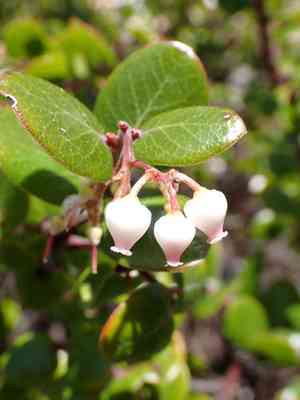
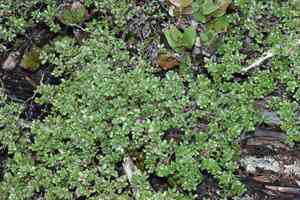
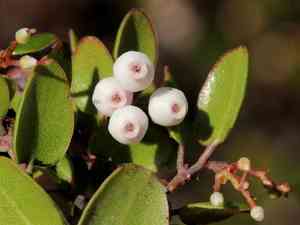
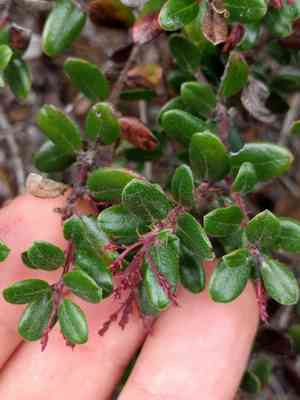
This plant can be identified by its shiny, dark green leaves that are round to oval in shape. It produces small, white to pink urn-shaped flowers and red to brown round berries.
Scientific Classification of Fort bragg manzanita
Phylum
Vascular plants
Class
Dicotyledons
Order
Ericales
Family
Heath
Genus
Arctostaphylos
Species
Fort bragg manzanita
Planting and Growing of Fort bragg manzanita
Care Difficulty
Easy
Watering Schedule
Every 2 days
Sunlight Requirements
Partial sun
Sunshine Duration
6-10 hours
Ideal Temperature
50-70℉
Soil Type
Potting Mix, Peat Mix
Soil pH
6.5-7.5
Fertilizer Type
Balanced
Pruning Season
Spring, Summer
Pruning Area
Branches, Leaves
Pruning Frequency
2 times a year
Repotting Season
Spring
Pot Type
Plastic, Ceramic
 How to Water Fort bragg manzanita?
The amount of water needed for Arctostaphylos nummularia should be around 500 milliliters per session. Ensure the water reaches the root zone without saturating it. The soil should feel moist but not soggy. Allow the top layer of soil to dry out between waterings to prevent waterlogging.
What are the symptoms of an underwatered Fort bragg manzanita?
›
What should I do if my Fort bragg manzanita is not getting enough water?
›
What are the symptoms of an overwatered Fort bragg manzanita?
›
How to save an overwatered Fort bragg manzanita?
›
 What Are the Sunlight Requirements for Fort bragg manzanita?
Arctostaphylos nummularia prefers a mix of full and partial sun. Ideally, morning sun allows for early photosynthesis, improving plant vigor and health. Partial sun helps in maintaining the moisture levels in the leaves, facilitating lush and healthy growth while minimizing stress from high temperatures.
What is the best location for ideal lighting?
›
How much light should it receive daily?
›
What happens if the plant experiences ideal lighting?
›
 What Is the Ideal Temperature Range for Fort bragg manzanita?
Arctostaphylos nummularia thrives best in climates where the temperatures remain consistent between 50°F and 70°F. These temperatures simulate the plant's native conditions, where moderate climate supports optimal growth.
 What Soil is Best for Fort bragg manzanita?
Arctostaphylos nummularia thrives in well-drained soils that prevent waterlogging. This condition is vital for its root health and overall growth, as excessive moisture can lead to root rot. While this plant doesn't demand highly fertile soils, a moderate nutrient level helps in maintaining its lush foliage and optimal growth. It can benefit from the occasional addition of organic matter. A slightly acidic soil is preferable to support the plant's nutrient uptake and help fend off diseases. The mild acidity ensures healthy foliage and robust flowering cycles.
 How to Fertilize Fort bragg manzanita?
For Arctostaphylos nummularia, it's vital to apply fertilizer sparingly because it thrives in nutrient-poor, well-drained soils. Use a balanced liquid fertilizer at half strength, about 1/4 cup per plant, to prevent over-nourishment.
 How to Prune Fort bragg manzanita?
Begin by examining the plant for any dead, diseased, or damaged wood. Remove these first to promote healthy growth and to allow better air circulation. It sets the stage for more selective cuts that will shape the plant. Focus on pruning the plant to enhance its natural shape while encouraging bushier growth. Cut back any long, unruly branches to maintained uniformity and remove any crossing branches to prevent damage through rubbing. After pruning, check if the plant requires watering or mulching to aid in recovery. Post-pruning care also includes monitoring for any signs of stress or disease, ensuring the plant heals properly.
More About Pruning Techniques→
 How to Propagate Fort bragg manzanita plant?
1
To propagate via seeds, first, collect viable seeds from mature Arctostaphylos nummularia plants. Cleaning and drying the seeds properly ensures they are ready for planting. Stratification might be required, mimicking winter conditions to break dormancy, which can involve refrigerating seeds for a few weeks.
2
Select healthy branches that are semi-hardwood for taking cuttings. Cut sections should be around 10-15 cm long. Ensure each cutting has at least a few leaves and treat the ends with rooting hormone to promote root development before planting in a suitable medium.
3
Select a low-lying branch of the plant and bend it down to the soil. Scarify the underside slightly and cover with soil to encourage rooting. Secure with a pin or small rock to maintain contact with the soil. Water regularly until roots develop, which can take a few months.
 How to Repot Fort bragg manzanita plant?
1
Monitor for signs such as roots growing out of drainage holes, soil compacting, or slowed growth. These indicate it might be time to consider repotting Arctostaphylos nummularia to provide it with more room and refreshed soil.
2
Select a pot that is just one size larger than the current one, ensuring it has adequate drainage holes. This helps in preventing waterlogging, which could lead to root rot, and provides enough space for root development.
3
Opt for a well-draining, acidic mix, ideally a blend designed for acid-loving plants. This mimics the plant’s natural habitat and helps maintain optimal health and growth, avoiding potential nutrient imbalances.



