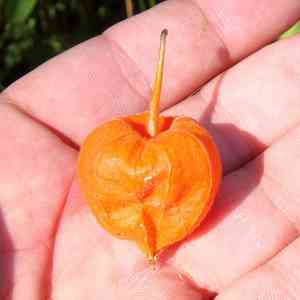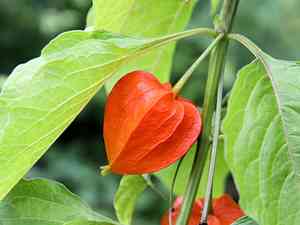
Strawberry ground cherry(Alkekengi officinarum)

Strawberry ground cherry (Alkekengi officinarum)

Also known as: Chinese lantern, Winter cherry

The standout characteristic of the strawberry ground cherry is its lantern-like, cherry-sized seed husks. These decorative husks are often used in dried floral arrangements. Unlike its American relatives, this Eurasian shrub grows up to a meter tall and thrives in sunny or lightly shaded garden borders.

Attributes of Strawberry ground cherry

Lifespan
Perennial
Plant Type
Herb
Plant Height
40-60 cm (16-24 inches)
Spread
Approximately 30 cm (12 inches)
Leaf Color
Green
Flower Size
2 cm (0.8 inches)
Flower Color
White Green

ForwardPlant - Identify plants with a snap

Identify and diagnose plants, get toxicity alerts, and explore safety guides for all types of fungi.

Try for Free

Images of Strawberry ground cherry

Strawberry ground cherry(Alkekengi officinarum)

Quickly Identify Strawberry ground cherry

1
This plant can be identified by its unique lantern-like husks that turn bright orange to red as they mature. Its leaves are ovate to lanceolate, with serrated edges. The small white star-shaped flowers bloom in summer, followed by the formation of the lantern-like calyx that encloses the fruit.

Scientific Classification of Strawberry ground cherry

Phylum
Vascular plants
Class
Dicotyledons
Order
Nightshades, bindweeds, gooseweeds, and allies
Family
Nightshade
Genus
Alkekengi
Species
Strawberry ground cherry

Planting and Growing of Strawberry ground cherry

Care Difficulty
Easy
Watering Schedule
Every 2 days
Sunlight Requirements
Partial sun
Sunshine Duration
4-10 hours
Ideal Temperature
59-77℉
Soil Type
Potting Mix, Peat Mix
Soil pH
6.5-7.5
Fertilizer Type
Balanced
Pruning Season
Spring, Summer
Pruning Area
Branches, Leaves
Pruning Frequency
2 times a year
Repotting Season
Spring
Pot Type
Plastic, Ceramic

water icon How to Water Strawberry ground cherry?

Alkekengi officinarum, commonly known as the Chinese lantern plant, thrives best when its soil remains consistently moist but not waterlogged. This means watering until the top inch of the soil feels damp but not soaked, around 200 ml is usually sufficient.
What are the symptoms of an underwatered Strawberry ground cherry?
What should I do if my Strawberry ground cherry is not getting enough water?
What are the symptoms of an overwatered Strawberry ground cherry?
How to save an overwatered Strawberry ground cherry?

sunlight icon What Are the Sunlight Requirements for Strawberry ground cherry?

Sunlight Requirements: Partial sun
Duration of light: 4 to 6 hours
Partial sun is optimal for Alkekengi officinarum, with 4 to 6 hours of light every day. This balance encourages healthy growth and successful flowering without the risk of leaf burn or withering.
Optimal Sunlight Exposure
Protecting from Excessive Light
Benefits of Ideal Lighting

temperature icon What Is the Ideal Temperature Range for Strawberry ground cherry?

Ideal Temperature: 59 ~ 77℉
The ideal temperature range for cultivating Alkekengi officinarum is between 59°F and 77°F. Within this range, the plant thrives, exhibiting optimal growth and producing vibrant fruit. Temperatures at or near the lower end of this spectrum help to prevent stress, while those at the higher end maximize metabolic processes, essential for its development.

soil icon What Soil is Best for Strawberry ground cherry?

Soil type: Loam, Sandy soil, Sandy loam
Soil PH: 6.5 ~ 7.5
Alkekengi officinarum thrives in well-drained soil. Ensuring proper drainage prevents waterlogging, which can lead to root rot. This allows the plant to develop a strong root system, supporting healthy growth and vibrant flower production. This plant benefits significantly from soil rich in organic matter. Adding compost or well-rotted manure enriches the soil, providing essential nutrients that lead to robust and lush foliage. While Alkekengi officinarum needs soil that doesn’t hold excess water, it still requires a moderate level of moisture retention. This balance ensures that the plant receives enough hydration to maintain its vibrant orange-red calyxes without drying out.

fertilize icon How to Fertilize Strawberry ground cherry?

Fertilizer type: Balanced
When fertilizing Alkekengi officinarum, it is important to ensure the amount is proportionate to its size and growth stage. Typically, use a balanced liquid fertilizer at half strength, around 5 ml per liter of water, applied evenly over the root area.

prune icon How to Prune Strawberry ground cherry?

Pruning Time: Spring, Autumn
Begin by assessing the Alkekengi officinarum for any visibly dead or diseased stems. Use clean, sharp pruning shears to snip these parts back to healthy tissue. It's crucial to make clean cuts to prevent any disease from entering the plant. Focus on maintaining a neat shape, cutting back any overgrown stems to allow light and air to penetrate through the plant. Remember to remove any stray ground shoots to keep the plant contained and vigorous. Shape your Alkekengi officinarum by cutting the outer stems slightly shorter than the center ones, creating a balanced, dome-shaped bush. Thinning the interior helps improve air circulation, reducing the chance of fungal issues. Cut back a portion of older, woodier branches to near ground level to encourage new stem growth. More About Pruning Techniques

propagate icon How to Propagate Strawberry ground cherry plant?

Propagate Time: Spring, Early spring
1
Begin by filling seed starting trays with a well-draining potting mix. Sprinkle Alkekengi officinarum seeds evenly over the surface, lightly cover with soil, and mist gently. Maintain consistent moisture until germination occurs, which could take two to three weeks.
2
Carefully dig up established Alkekengi officinarum plants in early spring. Use your hands or a sharp knife to separate the root clumps into small sections, each with roots and shoots. Replant immediately into prepared soil at the same depth they were growing before.
3
Select healthy roots in early spring and cut them into 2–3-inch segments. Bury these root sections horizontally a few inches deep in a pot filled with potting medium. Keep the medium moist and wait for new shoots to emerge from the roots.
More About Propagating Techniques

repot icon How to Repot Strawberry ground cherry plant?

Repotting frequency: Annually or biannually
1
Alkekengi officinarum may need repotting when the roots start to circle the pot, emerging from the drainage holes. Other signs include the soil drying out rapidly after watering, indicating the roots have taken over the pot, or if the plant shows signs of stunted growth. These indicators suggest it's time to give your plant a roomier home for continued healthy growth.
2
Select a pot that is one to two inches larger in diameter than the current one. Ensure it has drainage holes to prevent waterlogging. A pot that is too large can lead to overwatering issues, while one that is too small will not allow the roots to expand adequately. A good fit will provide the roots with ample space to grow while preventing excess water accumulation, ensuring a balanced and healthy environment.
3
Choose a well-draining, loamy soil mix that retains moisture without becoming soggy. A mix that includes components like peat, perlite, or pine bark can enhance drainage and aeration. This type of soil will provide Alkekengi officinarum with the necessary nutrients while maintaining the right balance of moisture, preventing root rot and encouraging robust growth.

ForwardPlant - Identify plants with a snap

Find the best spots for them to optimize their health, simply using your phone.

Try for Free

Toxicity of Strawberry ground cherry

Is Strawberry ground cherry toxic to humans?

The strawberry ground cherry carries a moderate toxicity level for humans, posing the risk of harm if any portion of the plant is consumed. Every part of the plant—leaves, stems, and berries—is deemed toxic. Upon ingestion, individuals may face a variety of symptoms, including gastrointestinal disturbances such as nausea, vomiting, and diarrhea. Furthermore, more serious reactions like dizziness, headaches, and, in certain cases, respiratory complications may arise. It is crucial for individuals to recognize the dangers linked with strawberry ground cherry and to avoid any unintentional consumption, given that the entire plant is toxic. Extra care should be taken to shield children from ingesting any part of the strawberry ground cherry, as their smaller body weight might render them more vulnerable to its toxic effects.

Is Strawberry ground cherry toxic to cat?

The strawberry ground cherry has a moderate level of toxicity for cats, posing a potential risk if consumed. The entire plant is considered harmful and may be ingested by cats unintentionally. Upon ingestion, cats could show symptoms of physical distress or sickness. Given that all sections of the strawberry ground cherry are toxic, ingestion must be approached with caution. If there is any suspicion that a cat has been poisoned by strawberry ground cherry, it is crucial to seek veterinary attention right away to secure the best possible outcome for the animal's health.

Is Strawberry ground cherry toxic to dog?

Strawberry ground cherry presents a moderate level of toxicity risk for dogs. Canines might inadvertently consume portions of the strawberry ground cherry, which can lead to poisoning. The entirety of the plant is toxic, and ingestion can cause a range of concerning symptoms. Dog owners must remain alert for indicators such as gastrointestinal distress, lethargy, or more serious clinical manifestations contingent on how much was consumed. Should poisoning from strawberry ground cherry be suspected, it is crucial to seek prompt veterinary attention to secure the best possible prognosis for the affected canine.

Identify toxic plants for your safety

Learn which plants are harmful to you and your pets, and make informed choices for a safer home!

Try for Free
WARNING
The judgment on toxicity and danger is for reference only. We DO NOT GUARANTEE any accuracy of such judgment. Therefore, you SHALL NOT rely on such judgment. It is IMPORTANT TO SEEK PROFESSIONAL ADVICE in advance when necessary.
More About Toxic Techniques