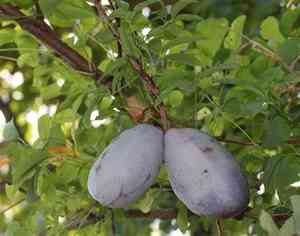
Three-leaf akebia(Akebia trifoliata)

Three-leaf akebia (Akebia trifoliata)

Also known as: Mitsuba akebi

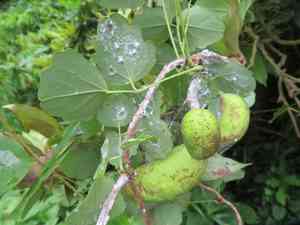
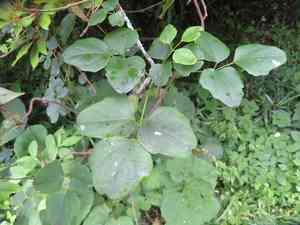
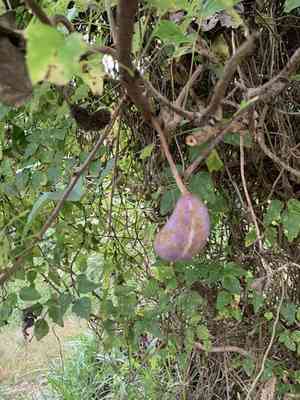
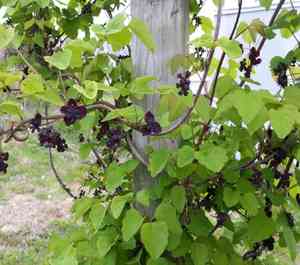
The plant has a vine that twines from left to right, featuring a sturdy stem around 2 cm in diameter. The bark is a mix of gray-brown and reddish-brown hues, displaying round patterns and irregular cracks. The leaves are arranged alternately and are palmately compound, consisting of three leaflets. Each leaflet measures between 2 to 6 cm in length and 1.5 to 4 cm in width, with an oval to broadly oval shape, a concave tip, a rounded base, and wavy, serrated edges. The upper surface of the leaves is dark green, while the underside is a lighter green, and both surfaces are smooth and hairless. The plant's inflorescences droop or bend from the sides of new leaves, bearing 10 to 30 small male flowers at the tip and 1 to 3 larger female flowers at the base. The fruit is an oblong berry, approximately 10 cm long, encased in thick skin that forms a tough outer shell. As it matures in the fall, the fruit transitions from green to purple or magenta and splits open to show the jelly-like flesh within. The pulp is white and contains numerous black seeds.

Attributes of Three-leaf akebia

Lifespan
Perennial
Plant Type
Vine
Plant Height
9 m
Spread
8 m
Leaf Color
Green Bronze
Flower Size
1-3 cm
Flower Color
Purple

ForwardPlant - Identify plants with a snap

Identify and diagnose plants, get toxicity alerts, and explore safety guides for all types of fungi.

Try for Free

Images of Three-leaf akebia

Three-leaf akebia(Akebia trifoliata)

Quickly Identify Three-leaf akebia

1
To identify Akebia trifoliata, look for compound leaves with three leaflets, aromatic purple flowers in clusters, and long, sausage-shaped fruits that split open when ripe.

Scientific Classification of Three-leaf akebia

Phylum
Vascular plants
Class
Dicotyledons
Order
Buttercups, poppies and allies
Family
Lardizabala
Genus
Chocolate vine
Species
Three-leaf akebia

Planting and Growing of Three-leaf akebia

Care Difficulty
Easy
Watering Schedule
Every 4 days
Sunlight Requirements
Partial sun
Sunshine Duration
4-6 hours
Ideal Temperature
59-77℉
Soil Type
Potting Mix, Peat Mix
Soil pH
6.5-7.5
Fertilizer Type
Balanced
Pruning Season
Spring, Summer
Pruning Area
Branches, Leaves
Pruning Frequency
2 times a year
Repotting Season
Spring
Pot Type
Plastic, Ceramic

water icon How to Water Three-leaf akebia?

For Akebia trifoliata, ensure the soil is kept consistently moist but not waterlogged. Water the plant thoroughly until you see a slight trickle from the pot's drainage hole. This usually equates to about 500 ml of water per session, getting the top 1-2 inches of soil visibly moist. Over time, adjust the amount based on the plant's response and environmental conditions.
What are the symptoms of an underwatered Three-leaf akebia?
What should I do if my Three-leaf akebia is not getting enough water?
What are the symptoms of an overwatered Three-leaf akebia?
How to save an overwatered Three-leaf akebia?

sunlight icon What Are the Sunlight Requirements for Three-leaf akebia?

Sunlight Requirements: Partial sun
Duration of light: 4-6 hours daily
Akebia trifoliata prefers partial sun conditions. These provide it with sufficient energy for growth and flower production without the risk of damage from excessive direct sun.
What conditions does Akebia trifoliata thrive in?
How can you ensure Akebia trifoliata receives ideal light?
What benefits does ideal light offer Akebia trifoliata?
More About Sunlight Requirements Techniques

temperature icon What Is the Ideal Temperature Range for Three-leaf akebia?

Ideal Temperature: 59 ~ 77℉
For the successful cultivation of Akebia trifoliata, maintaining an optimal temperature range between 59°F and 77°F is crucial. This range provides the plant with the needed warmth to thrive while avoiding excessive heat that can cause stress. Ensuring temperatures within this bracket will support proper growth, flowering, and fruiting.

soil icon What Soil is Best for Three-leaf akebia?

Soil type: Loam, Sandy loam
Soil PH: 6.5 ~ 7.5
Akebia trifoliata thrives in well-draining soil to prevent waterlogging, which can lead to root rot. Adequate drainage facilitates healthy root growth, allowing the plant to absorb nutrients efficiently and flourish with lush foliage and blooms. While drainage is crucial, the soil should also retain enough moisture to keep the roots hydrated without becoming overly saturated. This balance ensures that Akebia trifoliata receives consistent moisture, promoting steady growth. A nutrient-rich soil provides essential minerals and organic matter, contributing to robust growth and vibrant foliage for Akebia trifoliata. Utilizing compost or organic fertilizers enhances soil fertility over time.

fertilize icon How to Fertilize Three-leaf akebia?

Fertilizer type: Balanced
For Akebia trifoliata, the fertilizer amount should be moderate. Use a balanced fertilizer with equal parts of nitrogen, phosphorus, and potassium (e.g., 10-10-10). Apply 1/2 cup of granular fertilizer around the base of the plant, or use liquid fertilizer diluted to half strength.

prune icon How to Prune Three-leaf akebia?

Pruning Time: Spring, Summer
Start by inspecting the plant for any dead or damaged stems. Use sharp, clean pruning shears to cut these back to the main stem. Look for stems that cross or are growing inwards and cut them to open the plant's structure. Aim to create an even shape that allows for good air circulation and sunlight penetration. Akebia trifoliata can climb over structures, so it's important to gently guide and shape these vines. Trim back longer shoots, ensuring they are evenly distributed across the support structure. Regularly monitor for any new growth that might disrupt the desired aesthetic and promptly prune it.

propagate icon How to Propagate Three-leaf akebia plant?

Propagate Time: Spring, Early summer
1
Begin by filling the seed tray with a high-quality seed starting mix. Sow the Akebia trifoliata seeds on the surface, covering them lightly with additional mix. Keep the tray in a warm, bright location, and mist regularly to maintain moisture.
2
Choose healthy stems from an existing Akebia trifoliata plant. Cut 10-15 cm sections just below a leaf node. Remove the lower leaves and dip the cut end in rooting hormone before planting it in a well-draining substrate.
3
For layering, select a low branch and gently bend it to the ground. Remove leaves from the section to be covered with soil. Secure the branch with a U-shaped pin and cover it with soil, leaving the tip exposed, until roots develop.
More About Propagating Techniques

repot icon How to Repot Three-leaf akebia plant?

Repotting frequency: Every 2-3 years
1
Akebia trifoliata signals its need for repotting when roots become visible through drainage holes, growth slows down, or the plant becomes top-heavy. The optimal time for repotting is during its active growth phases in spring or early autumn, ensuring the plant quickly establishes in its new environment.
2
Select a pot that is 1 to 2 inches larger in diameter than the current pot. It should have adequate drainage holes to prevent waterlogging, which can lead to root rot. A slightly larger pot provides ample space for root expansion and supports healthy growth.
3
Opt for a well-draining loamy soil mix that retains moisture yet prevents waterlogging. A mix with organic matter supports root health by providing essential nutrients, aiding in overall plant vigor. Good drainage helps prevent fungal infections, keeping roots healthy and sustained.

ForwardPlant - Identify plants with a snap

Find the best spots for them to optimize their health, simply using your phone.

Try for Free