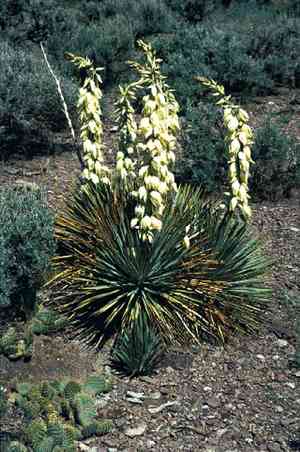
Spanish bayonet (Yucca harrimaniae)
Also known as: Dwarf yucca
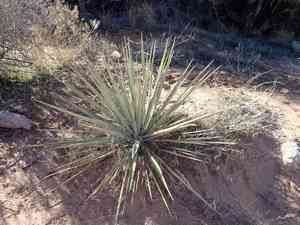
The Spanish bayonet (Yucca harrimaniae) is a small, stemless plant that forms clusters of rosettes. Its distinctive flowers hang downward and feature a blend of greenish-white and purplish hues. This species shares a close relationship with Y. sterilis.
In This Article
Attributes of Spanish bayonet
Lifespan
Perennial
Plant Type
Herb, Shrub
Plant Height
15 cm to 41 cm
Spread
15 cm to 30 cm
Leaf Color
Green to bluish-green
Flower Size
2.5 cm to 8 cm
Flower Color
White to cream
Images of Spanish bayonet
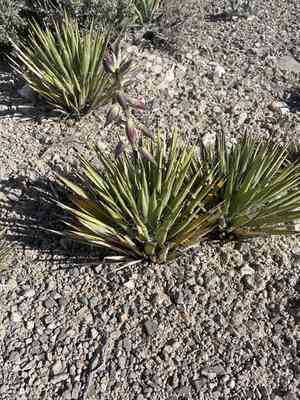
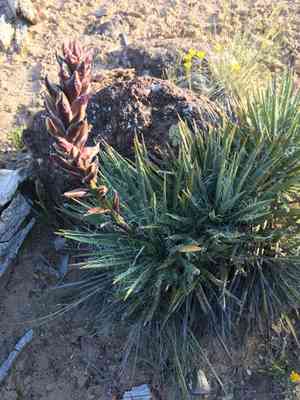
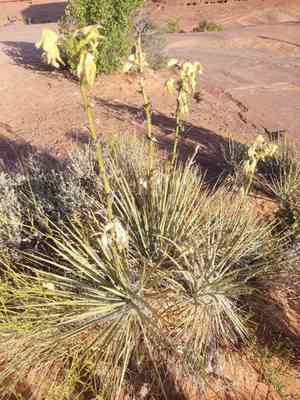
Quickly Identify Spanish bayonet
1
Basal rosette of long, narrow leaves edged with fine, curling fibers.
2
Creamy-white bell-shaped flowers with purplish markings, clustered in late spring.
3
Large seed pods, green turning brown upon ripening, with bitter skin.
4
Gray-blue pointed leaves with distinctive curly white filaments.
5
Short, stout stem/trunk with fibrous texture, edible inner portion when cooked.
Scientific Classification of Spanish bayonet
Phylum
Vascular plants
Class
Monocotyledons
Order
Asparagales
Family
Asparagus
Genus
Yuccas
Species
Spanish bayonet
Planting and Growing of Spanish bayonet
Care Difficulty
Easy
Watering Schedule
Every 2 days
Sunlight Requirements
Full sun
Sunshine Duration
4-8 hours
Ideal Temperature
60-75℉
Soil Type
Potting Mix, Peat Mix
Soil pH
6.5-7.5
Fertilizer Type
Balanced
Pruning Season
Spring, Summer
Pruning Area
Branches, Leaves
Pruning Frequency
2 times a year
Repotting Season
Spring
Pot Type
Terracotta, Plastic
 How to Water Spanish bayonet?
Yucca harrimaniae prefers moderate watering, ensuring that the soil is thoroughly soaked but not waterlogged. This desert plant thrives when its soil is allowed to dry out almost completely between waterings. Pour approximately 500 milliliters of water per session, ensuring it reaches the root zone but does not cause standing water.
What are the symptoms of an underwatered Spanish bayonet?
›
What should I do if my Spanish bayonet is not getting enough water?
›
What are the symptoms of an overwatered Spanish bayonet?
›
How to save an overwatered Spanish bayonet?
›
 What Are the Sunlight Requirements for Spanish bayonet?
Yucca harrimaniae benefits from full to partial sun exposure. Adequate light enhances its vigor, promotes compact growth, and boosts its natural resilience against pests.
What is Yucca harrimaniae's preferred light exposure?
›
How to achieve ideal lighting for Yucca harrimaniae?
›
What are the benefits if Yucca harrimaniae gets enough sunlight?
›
 What Is the Ideal Temperature Range for Spanish bayonet?
Yucca harrimaniae thrives between 60°F and 75°F. This range provides an optimal environment for photosynthesis and overall growth. Maintaining temperatures within this range ensures the plant's resilience and vigor.
 What Soil is Best for Spanish bayonet?
Yucca harrimaniae thrives in well-draining soil, which prevents water from accumulating around its roots. This is crucial for avoiding root rot and maintaining overall plant health, as stagnant water can lead to fungal diseases. This plant prefers soils low in organic matter, as it mimics its natural habitat. High organic content can retain too much moisture, potentially leading to root decay, whereas lower organic levels ensure faster drainage. While not demanding, Yucca harrimaniae benefits from mineral-rich soil. This can help sustain the plant over time by providing essential nutrients, contributing to its resilience and robust growth.
 How to Fertilize Spanish bayonet?
For Yucca harrimaniae, apply liquid fertilizer at a quarter of the recommended dose to avoid root burn. This plant thrives in nutrient-poor soils, so a little goes a long way. Ensure to dilute liquid fertilizers to half strength before application.
 How to Prune Spanish bayonet?
Before you start, ensure you have a pair of sharp pruning shears and gloves. Sharp shears make precise cuts and minimize stress to the plant. Gloves will protect your hands from the sharp edges of the leaves. Identify any dead, dying, or yellowing leaves. Use your shears to cut these leaves at their base near the trunk. This helps the plant direct energy to healthier parts, ensuring better growth. If you wish to shape your Yucca harrimaniae, focus on cutting back leggy or unruly growth. Be careful not to remove too much at once; instead, aim for a balanced silhouette that maintains the plant's natural form.
More About Pruning Techniques→
 How to Propagate Spanish bayonet plant?
1
Begin by collecting mature seeds from your Yucca harrimaniae. Clean them thoroughly and let them dry. Prepare a seed tray with a well-draining potting mix, ideally one that is sandy to mimic native conditions.
2
Sow the seeds shallowly in the prepared trays. Ensure they are covered lightly with soil. Water gently to moisten the soil but do not overwater, as seeds are prone to rotting in soggy conditions.
3
Select a healthy yucca plant and use pruning shears to separate a section with roots. Replant the division in a pot with well-draining soil, ensuring roots are covered and the plant is stable.
 How to Repot Spanish bayonet plant?
1
Yucca harrimaniae typically needs repotting when the roots begin to circle the pot or grow out of the drainage holes. Spring is ideal as the plant actively grows, giving it time to root well. Look for signs like slow growth, poor drainage, and roots poking out.
2
Select a pot that is 2-3 inches larger in diameter than the current one, with ample drainage holes. Terracotta pots are ideal as they allow excess moisture to evaporate, reducing the risk of root rot which is crucial for Yuccas needing dry conditions.
3
Opt for a well-draining cactus mix, often supplemented with sand or perlite. This soil mimics Yucca's natural habitat, promoting air circulation around roots and preventing moisture retention which can lead to root rot, preserving plant health.
Learn More About Spanish bayonet Diseases
Anthracnose
Bacterial Leaf Spot
Bacterial Soft Rot
Bacterial Wilt
Crown Gall
Cyst Nematode
Damping-off
Drought Stress
Fusarium Wilt
Gray Mold
Leaf Spot
Mosaic
Nutrient Deficiency
Nutrient Toxicity
Powdery Mildew
Root Rot
Root-knot Nematode
Rusts
Sooty Mold
Spider Mites
Temperature Stress
Thrips Damage
White Mold



