
Cleland's evening primrose (Oenothera clelandii)
Also known as: Cleland's Evening Primrose
Cleland's evening primrose is a resilient plant that flourishes in dry, well-drained soils typical of arid and semi-arid regions. It features tall, slender stalks and lance-shaped leaves. Its striking yellow flowers open in the evening, emitting a sweet fragrance that attracts nocturnal pollinators such as moths. Adapted to thrive in disturbed or open ground, this hardy plant is well-suited to varying environmental conditions.
In This Article
Attributes of Cleland's evening primrose
Lifespan
Biennial, Perennial
Plant Type
Herb
Plant Height
30 cm to 91 cm
Spread
30-40 cm (12-16 inches)
Leaf Color
Green
Flower Size
3-5 cm (1.2-2 inches)
Flower Color
Yellow
Images of Cleland's evening primrose

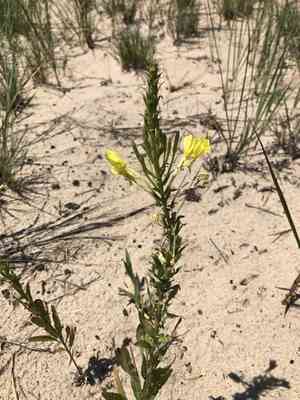
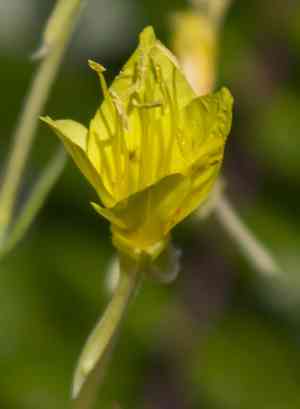
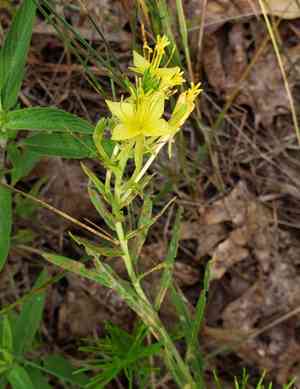
Quickly Identify Cleland's evening primrose
1
Oenothera clelandii can be identified by its lance-shaped leaves, yellow four-petaled flowers, and its habit of blooming in the evening. The stems are typically reddish and the plant grows erect.
Scientific Classification of Cleland's evening primrose
Phylum
Vascular plants
Class
Dicotyledons
Order
Myrtales
Family
Evening primrose
Genus
Evening Primrose
Species
Cleland's evening primrose
Planting and Growing of Cleland's evening primrose
Care Difficulty
Easy
Watering Schedule
Every 3 days
Sunlight Requirements
Full sun
Sunshine Duration
4-8 hours
Ideal Temperature
60-75℉
Soil Type
Potting Mix, Peat Mix
Soil pH
6-7.5
Fertilizer Type
Balanced
Pruning Season
Spring, Summer
Pruning Area
Branches, Leaves
Pruning Frequency
2 times a year
Repotting Season
Spring
Pot Type
Terracotta, Plastic
 How to Water Cleland's evening primrose?
For Oenothera clelandii, water the plant until the soil is thoroughly moistened but not waterlogged. A key principle is to provide enough water to penetrate deeply into the soil, promoting root growth. Aim for about 250 ml of water per session, allowing excess to drain away.
What are the symptoms of an underwatered Cleland's evening primrose?
›
What should I do if my Cleland's evening primrose is not getting enough water?
›
What are the symptoms of an overwatered Cleland's evening primrose?
›
How to save an overwatered Cleland's evening primrose?
›
 What Are the Sunlight Requirements for Cleland's evening primrose?
Oenothera clelandii thrives best in full sun, receiving about 6 to 8 hours of light daily. Ideal light ensures robust growth, vibrant blooms, and healthy foliage by fulfilling its energy requirements for photosynthesis.
What is the ideal light source?
›
How to achieve the ideal light conditions?
›
What are the benefits of ideal light?
›
 What Is the Ideal Temperature Range for Cleland's evening primrose?
Why is an ideal temperature range important for Oenothera clelandii? Maintaining an ideal temperature range of 60-75°F ensures optimal growth and flowering. This range supports vital physiological processes, enabling the plant to thrive and produce vibrant blooms. Temperatures in this range simulate the natural conditions of their native environment, promoting photosynthesis efficiency and preventing stress.
 What Soil is Best for Cleland's evening primrose?
Oenothera clelandii thrives best in soil that offers excellent drainage. Good drainage helps prevent root rot, a common issue with stagnated water, ensuring healthy root development and vigorous growth. Soil enriched with moderate organic matter supports the nutritional needs of Oenothera clelandii. Organic matter enhances nutrient availability, improving plant vigor and flowering capacity. The plant prefers slightly acidic to neutral pH levels, between 6.0 to 7.5. This range optimally facilitates nutrient uptake, contributing to the plant's overall health and reproductive success.
 How to Fertilize Cleland's evening primrose?
For Oenothera clelandii, a balanced N-P-K ratio of 10-10-10 is ideal. When using liquid fertilizer, dissolve 10 ml in a liter of water for young plants. Mature plants may require up to 20 ml per liter, depending on growth observation.
 How to Prune Cleland's evening primrose?
Start by removing any dead or damaged stems and leaves. This not only enhances the plant’s appearance but also prevents potential sources of disease from affecting healthy growth. Focus on cutting back overgrown branches to shape the plant. Remove branches that cross or overcrowd other parts to increase sunlight and air penetration, which promotes healthier blooms. Make your cuts just above a leaf node or a bud. This technique encourages new growth in the right direction and makes for a more aesthetically pleasing plant.
More About Pruning Techniques→
 How to Propagate Cleland's evening primrose plant?
1
Select a well-draining potting mix suitable for propagating Oenothera clelandii. Ensure the soil is slightly moist before sowing seeds or placing cuttings.
2
Using a sterile cutting knife, take 4-6 inch cuttings from a healthy parent plant. Ensure the cuttings have at least a couple of leaves and avoid taking blooming parts.
3
Insert the cuttings or seeds into the prepared trays, ensuring they are at the right depth. Water them lightly to settle the soil, being cautious not to waterlog.
 How to Repot Cleland's evening primrose plant?
1
Look for signals like roots protruding from the drainage holes, slowed growth, or compacted soil that doesn't retain water well to know it's time to repot Oenothera clelandii.
2
Opt for a pot that's only slightly larger than the current one to ensure proper root system development. The new pot should have ample drainage holes, which prevent waterlogging and root rot, ensuring healthier plant growth.
3
A well-draining sandy mix is ideal as it mimics Oenothera clelandii's natural habitat and prevents issues related to water retention, promoting healthier growth conditions.
Learn More About Cleland's evening primrose Diseases
Bacterial Leaf Spot
Bacterial Soft Rot
Bacterial Wilt
Chemical Injury
Crown Gall
Cyst Nematode
Damping-off
Downy Mildew
Drought Stress
Fusarium Wilt
Gray Mold
Leaf Curl
Leaf Spot
Mosaic
Nutrient Deficiency
Nutrient Toxicity
Powdery Mildew
Root Rot
Root-knot Nematode
Rusts
Sooty Mold
Spider Mites
Temperature Stress
Thrips Damage
White Mold



