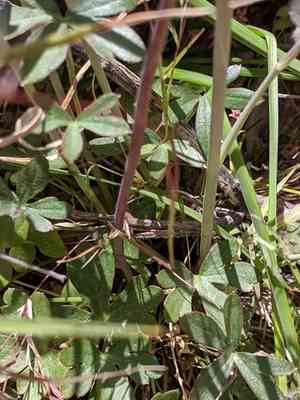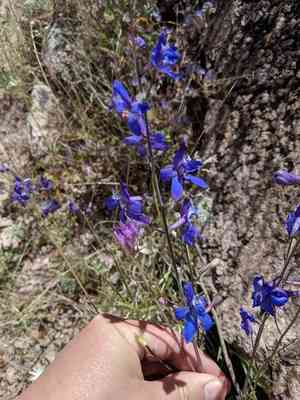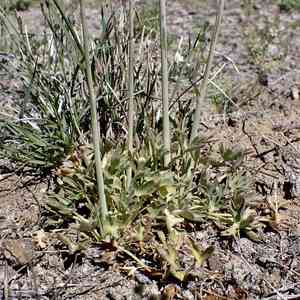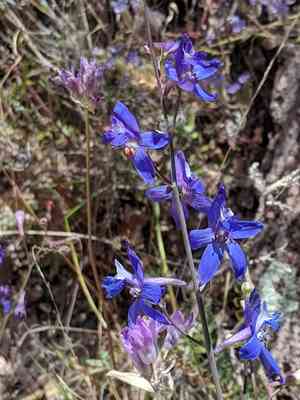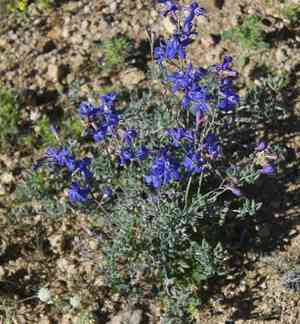
Tall mountain larkspur(Delphinium scaposum)

Tall mountain larkspur (Delphinium scaposum)

Also known as: Barestem Larkspur

Tall mountain larkspur (Delphinium glaucum) is notable for its tall, slender stems which can reach up to 2 meters, topped with clusters of vibrant blue to violet flowers. This perennial plant is typically found in moist, well-drained soils of subalpine and alpine meadows.

**Distinctive Features:**
1. **Stem and Height:** Erect stems that can grow up to 2 meters, providing a dramatic vertical element in the landscape.
2. **Flowers:** Striking blue to violet blooms arranged in a dense, spiky inflorescence.
3. **Leaves:** Basal leaves that are deeply lobed and bluish-green, aiding in water conservation.

**Ecological Roles:**
1. **Pollinator Support:** The bright flowers attract a variety of pollinators, including bees, butterflies, and hummingbirds, enhancing local biodiversity.
2. **Soil Stabilization:** The plant’s deep root system helps to anchor soil, preventing erosion in its mountainous habitat.
3. **Ecosystem Contribution:** Provides essential food and habitat for insects and small wildlife.

In summary, the tall mountain larkspur is a key player in its native environment, promoting ecological stability and supporting a multitude of species through its various roles.

Attributes of Tall mountain larkspur

Lifespan
Perennial
Plant Type
Herb
Plant Height
30 cm to 91 cm
Spread
Not applicable, as it is a single-stemmed plant
Leaf Color
Green
Flower Size
Approximately 2-4 cm
Flower Color
Blue

ForwardPlant - Identify plants with a snap

Identify and diagnose plants, get toxicity alerts, and explore safety guides for all types of fungi.

Try for Free

Images of Tall mountain larkspur

Tall mountain larkspur(Delphinium scaposum)

Quickly Identify Tall mountain larkspur

1
The Barestem Larkspur can be identified by its tall, unbranched stems that usually bear loose clusters of vibrant blue flowers. The basal leaves are deeply divided and have a lacy appearance. The flowers have five petal-like sepals and are spurred, typical of the Delphinium genus.

Scientific Classification of Tall mountain larkspur

Phylum
Vascular plants
Class
Dicotyledons
Order
Ranunculales
Family
Buttercup
Genus
Larkspurs
Species
Tall mountain larkspur

Planting and Growing of Tall mountain larkspur

Care Difficulty
Moderate
Watering Schedule
Every 3 days
Sunlight Requirements
Full sun
Sunshine Duration
4-6 hours
Ideal Temperature
60-75℉
Soil Type
Potting Mix, Peat Mix
Soil pH
6.5-7.5
Fertilizer Type
Balanced
Pruning Season
Spring, Summer
Pruning Area
Branches, Leaves
Pruning Frequency
2 times a year
Repotting Season
Spring
Pot Type
Plastic, Ceramic

water icon How to Water Tall mountain larkspur?

For Delphinium scaposum, watering should mimic its natural dry habitat. Ensure thorough watering, allowing the water to soak through the root zone completely, but avoid waterlogging the soil.
What are the symptoms of an underwatered Tall mountain larkspur?
What should I do if my Tall mountain larkspur is not getting enough water?
What are the symptoms of an overwatered Tall mountain larkspur?
How to save an overwatered Tall mountain larkspur?

sunlight icon What Are the Sunlight Requirements for Tall mountain larkspur?

Sunlight Requirements: Full sun, Partial sun
Duration of light: 6 to 8 hours daily.
Delphinium scaposum ideally thrives with partial to full day sun exposure. Optimal light ensures vigorous growth, vibrant bloom colors, and improved disease resistance.
Optimal Light Duration
Solution for Achieving Ideal Light
Benefits of Correct Light Exposure

temperature icon What Is the Ideal Temperature Range for Tall mountain larkspur?

Ideal Temperature: 60 ~ 75℉
The ideal temperature range for Delphinium scaposum is between 60°F and 75°F. This range promotes optimal growth and blooming as it mimics the plant's natural environment, providing the necessary warmth without causing stress.

soil icon What Soil is Best for Tall mountain larkspur?

Soil type: Sandy soil, Sandy loam, Loam
Soil PH: 6.5 ~ 7.5
Delphinium scaposum thrives in well-drained soil, which prevents root rot by allowing excess water to quickly escape. This is crucial for the plant's health and ensures robust growth. A soil rich in organic matter offers essential nutrients, promoting lush foliage and vibrant blooms. This ensures the plant reaches its full ornamental potential. While the soil should be well-drained, it also needs to retain some moisture to prevent the plant from desiccating. This balance is key to maintaining turgor and preventing wilting.

fertilize icon How to Fertilize Tall mountain larkspur?

Fertilizer type: Balanced
For Delphinium scaposum, the recommended fertilizer amount depends on the plant's growth stage. During the active growth phase, apply approximately 1/2 to 1 teaspoon of balanced NPK fertilizer per plant, ensuring even distribution around the root zone. Avoid direct contact with the stem to prevent burns.

prune icon How to Prune Tall mountain larkspur?

Pruning Time: Spring, Summer
Always use sharp, sterilized pruning shears to prevent the spread of disease between plants. Dull tools can cause jagged cuts that may harm the plant and open pathways for pathogens. Avoid pruning in late summer or autumn, as it might encourage new growth that could be damaged by winter frost. Focus on spring and early summer cutbacks to give the plant plenty of time to recover and thrive. Delphinium sap can be irritating to the skin for some people. It is advisable to wear gloves and long sleeves while pruning to protect yourself from possible irritation. More About Pruning Techniques

propagate icon How to Propagate Tall mountain larkspur plant?

Propagate Time: Spring,Late spring,Early spring
1
Start by filling seed trays with a well-draining potting mix. Lightly sow the seeds on the surface and cover them with a thin layer of the soil mix. Water gently to moisten the soil and place the trays in a warm, well-lit area.
2
Select a healthy stem from the parent plant near the base. Use sharp pruning shears to cut a 4-6 inch long piece. Remove the lower leaves, and dip the cut end in rooting hormone before planting it in moist potting mix.
3
Carefully dig up a mature Delphinium scaposum with roots intact. Shake off excess soil and use a sharp knife to divide the plant into sections, each with its own set of roots and shoots. Replant the divisions into prepared soil immediately.
More About Propagating Techniques

repot icon How to Repot Tall mountain larkspur plant?

Repotting frequency: Every two years
1
Look for signs such as the plant becoming root-bound, with roots emerging from the drainage holes. If the plant's growth seems stunted or the soil dries out rapidly, these are indicators that it's time to repot your Delphinium scaposum.
2
Select a pot that is one size larger than the current one, with ample drainage holes. A good-sized pot helps prevent root bounding, allows the roots to expand, and minimizes waterlogging, promoting healthier growth.
3
Opt for a well-draining potting mix, ideally one that retains moisture while facilitating proper drainage. This type of soil ensures that your plant's roots do not sit in water, preventing root rot and enabling optimal nutrient uptake.

ForwardPlant - Identify plants with a snap

Find the best spots for them to optimize their health, simply using your phone.

Try for Free

Toxicity

ingestion

Identify toxic plants for your safety

Learn which plants are harmful to you and your pets, and make informed choices for a safer home!

Try for Free
WARNING
The judgment on toxicity and danger is for reference only. We DO NOT GUARANTEE any accuracy of such judgment. Therefore, you SHALL NOT rely on such judgment. It is IMPORTANT TO SEEK PROFESSIONAL ADVICE in advance when necessary.