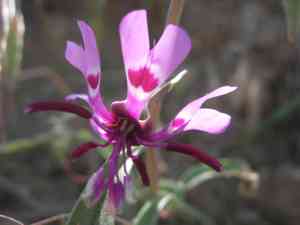
Gunsight clarkia (Clarkia xantiana)
Also known as: Farewell to Spring, Santa Lucia Mountain clarkia
The dune evening primrose (Oenothera deltoides) is an enchanting wildflower native to California's sandy terrains. Its delicate, white to pale pink blossoms open in the evening, creating a mesmerizing display. Well-suited to arid conditions, this resilient annual features rosettes of spoon-shaped leaves that flourish in the challenging Mediterranean climate.
In This Article
Attributes of Gunsight clarkia
Lifespan
Annual
Plant Type
Herb
Plant Height
0.3 to 0.6 meters
Spread
Not applicable (herbaceous plant)
Leaf Color
Green
Flower Size
2 to 4 centimeters
Flower Color
Pink to lavender with dark markings
Images of Gunsight clarkia
Quickly Identify Gunsight clarkia
1
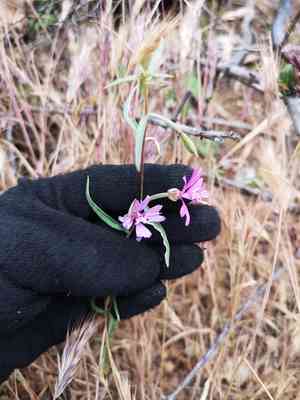
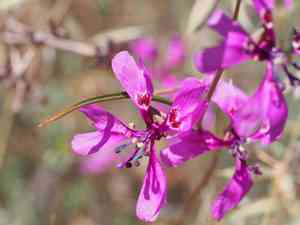
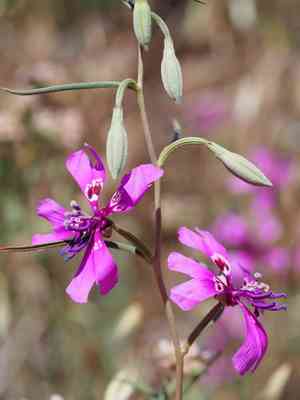
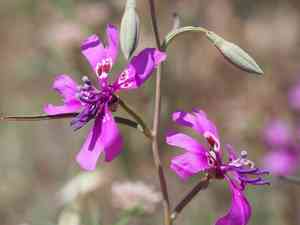
Clarkia xantiana can be identified by its slender, erect stems and bright pink to lavender flowers with four petals, each with dark pink or purple markings at the base. The leaves are narrow and lance-shaped.
Scientific Classification of Gunsight clarkia
Phylum
Vascular plants
Class
Dicotyledons
Order
Myrtales
Family
Evening primrose
Genus
Clarkia
Species
Gunsight clarkia
Planting and Growing of Gunsight clarkia
Care Difficulty
Moderate
Watering Schedule
Every 3 days
Sunlight Requirements
Full sun
Sunshine Duration
4-6 hours
Ideal Temperature
60-75℉
Soil Type
Potting Mix, Peat Mix
Soil pH
6.5-7.5
Fertilizer Type
Balanced
Pruning Season
Spring, Summer
Pruning Area
Branches, Leaves
Pruning Frequency
2 times a year
Repotting Season
Spring
Pot Type
Plastic, Ceramic
 How to Water Gunsight clarkia?
Clarkia xantiana, often found in regions with dry seasons, thrives with a moderate watering approach. Water thoroughly until the soil is evenly damp but not soggy. A good rule of thumb is to water until you see a slight runoff from the bottom of the pot, indicating the moisture has reached deep into the soil layers.
What are the symptoms of an underwatered Gunsight clarkia?
›
What should I do if my Gunsight clarkia is not getting enough water?
›
What are the symptoms of an overwatered Gunsight clarkia?
›
How to save an overwatered Gunsight clarkia?
›
 What Are the Sunlight Requirements for Gunsight clarkia?
Clarkia xantiana prefers full sun to partial sun exposure, ideally enjoying 6 to 8 hours of sunlight to promote robust growth and prolific flowering throughout the season.
What is the ideal sunlight for Clarkia xantiana?
›
How can I ensure my plant gets ideal sunlight?
›
What are the benefits of providing ideal sunlight?
›
 What Is the Ideal Temperature Range for Gunsight clarkia?
Clarkia xantiana thrives best in temperatures ranging from 60°F to 75°F. This range supports essential physiological processes, promoting optimal growth, flowering, and general health of the plant. Ensuring temperatures within this range can significantly enhance the plant's productivity and lifespan.
 What Soil is Best for Gunsight clarkia?
Clarkia xantiana thrives in well-drained soils that prevent waterlogging. Adequate drainage ensures that the plant's roots receive enough oxygen, reducing the risk of root rot and promoting healthier growth. Opt for soils rich in organic matter to support Clarkia xantiana's growth. Nutrients provided by organic matter enhance plant vitality and bloom production, leading to a more vibrant and bountiful display. The soil should have moderate water retention capacity. This ensures that while the soil remains moist for essential growth processes, it doesn't become overly saturated, thus maintaining plant health.
 How to Fertilize Gunsight clarkia?
Clarkia xantiana thrives with a balanced fertilizer application. For liquid fertilizers, dilute them to half strength and use about 1 liter per square meter. Ensure not to oversaturate, as this plant prefers a mild nutrient boost.
 How to Prune Gunsight clarkia?
Begin by sterilizing your pruning shears to prevent the spread of any diseases. Carefully examine Clarkia xantiana and identify any dead, withered, or diseased stems and leaves. Cut them back to their base to encourage new growth. Trim back any excessive growth on healthy branches to alleviate overcrowding and allow sunlight to penetrate the plant evenly, boosting blossoming potential. Finally, collect and dispose of all cuttings after pruning to prevent disease spread in the garden.
More About Pruning Techniques→
 How to Propagate Gunsight clarkia plant?
1
Begin by filling the seed trays with a suitable potting mix. It's important to ensure the soil is moist but not waterlogged, as excess moisture can hinder seed germination and cause damping-off.
2
Scatter the Clarkia xantiana seeds evenly over the surface of the soil. They require light for germination, so do not cover them completely with soil. Gently press them into the surface.
3
Keep the soil consistently moist until the seeds germinate. Using a spray bottle can help prevent washing the seeds away. Ensure the soil does not dry out, especially in the initial stages.
 How to Repot Gunsight clarkia plant?
1
Clarkia xantiana signals its need for repotting when you notice stunted growth, roots emerging from drainage holes, or the soil drying out too quickly after watering. These signs suggest that the plant's roots have outgrown their current space or that the soil has deteriorated, affecting its ability to sustain the plant's health. Ideally, repotting should occur in the early spring, just before the plant enters its active growth phase. This timing allows the plant to quickly establish itself in the new soil, supported by the growing season ahead.
2
Select a pot that is only slightly larger than the current one — about 1-2 inches wider in diameter. Opting for a pot that is too large can lead to water retention issues, potentially causing root rot. A pot with adequate drainage is essential to prevent excess moisture from accumulating. The material of the pot, such as ceramic or terracotta, can also impact water retention, so choose according to your climate and watering routine. A good pot should support healthy root development and ensure balanced moisture levels.
3
For Clarkia xantiana, choose a well-draining potting mix to avoid waterlogging, which can lead to root rot. A mix enriched with sand, perlite, or vermiculite ensures proper aeration while maintaining essential moisture levels. The ideal soil should support healthy root expansion and provide the necessary nutrients for your plant's growth. High-quality soil enhances water movement, prevents compaction, and allows roots to access nutrients, ultimately contributing to a robust, flourishing Clarkia xantiana.



