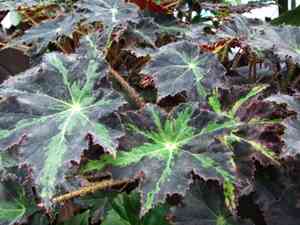
Boost Growth: How and When to Repot Your Starleaf begonia Plant
1
Transplant your Starleaf begonia every two to three years for best development.
2
Spring and winter are the ideal seasons for repotting your Starleaf begonia.
3
Utilize a potting mix that drains well and a container with drainage openings to avoid excessive moisture.
Reasons to Replant Your Starleaf Begonia
Recognizing indicators that suggest it's time for a new container
Unsure if your Starleaf begonia requires replanting? Observe for clear signals. If you see roots encircling the soil's top or bottom, or emerging from the pot's drainage openings, it's time to consider a larger vessel. Restricted development and drooping foliage, despite consistent watering, are further signs your plant has outgrown its current home.
Advantages of replanting for improved vitality
Replanting goes beyond simply providing your Starleaf begonia with a different pot; it's about promoting healthier development. Fresh substrate supplies new nutrients that can invigorate the plant. Furthermore, replanting helps alleviate compacted soil and offers more room for roots to spread, thereby enhancing overall plant robustness.
What You'll Need for Starleaf Begonia Replanting
Selecting the appropriate container and growing medium
Choose a pot that is one size larger than its current one. Ensure it possesses sufficient drainage holes to prevent water accumulation. Regarding the growing medium, a well-draining potting mix is crucial. You can seek out a blend specifically formulated for begonias, which often contains peat moss, perlite, and pine bark.
Essential implements for the replanting procedure
To successfully replant your Starleaf begonia, you'll require a new pot, fresh potting mix, a small gardening trowel, and pruning shears. Confirm that all tools are clean and disinfected to prevent the transmission of pests or diseases.
Step-by-Step Instructions for Replanting Starleaf Begonia
Preparing the new container and growing medium
Begin by filling the base of the new pot with a layer of fresh potting mix. Ensure the medium is evenly distributed and the pot has effective drainage.
Safely extracting the plant from its old container
Gently turn the plant sideways, holding it carefully by its stems and leaves. Tap the bottom of the pot to dislodge the plant. If the plant resists, use a knife to trace around the pot's rim to release the root ball.
Positioning and stabilizing the plant in the new container
Place your Starleaf begonia in the center of the new pot. Add soil around the root ball, making sure the plant is upright and secure. Press the soil gently to eliminate any air pockets.
Post-replanting care: Irrigation and placement advice
Once replanted, water the plant thoroughly until liquid flows from the drainage holes. Position your Starleaf begonia in a location with bright, indirect illumination. Avoid direct sunlight to prevent leaf scorching.
Common Issues During Replanting and How to Prevent Them
Preventing root damage during the replanting process
Handle the plant delicately and avoid pulling on its stems. If the roots are tightly intertwined, carefully separate them with your fingers or a sanitized knife. Avoid cutting healthy roots as much as possible.
Addressing potential pest or disease transfer in new substrate
Always use fresh, sterile potting mix to minimize the risk of ailments. Inspect the plant for any indications of pests before replanting. If you observe any, treat them with an appropriate pesticide or insecticidal soap prior to proceeding.



