How to Prune Common goldenthistle?
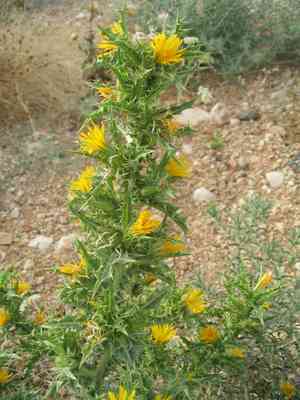
This perennial, resembling a thistle, is recognized for its prickly leaves and vibrant yellow blossoms. Essential trimming for common goldenthistle entails severing faded flower stems to stimulate fresh development and preserve a neat look. The most effective pruning occurs in Spring and Summer, coinciding with periods of vigorous growth. Consistent elimination of aged blooms can deter self-propagation and manage its spread. Pruning not only boosts the plant's robustness but also fosters thicker foliage and more abundant flowering in the subsequent period.
Advantages of Trimming Common Goldenthistle
Advantages of Trimming Common Goldenthistle
Trimming common goldenthistle encourages robust development and assists in maintaining its desired form. Strategic cutting back fosters a sound structure and resilience, vital for the plant's health.
Optimal Time for Trimming Common Goldenthistle
Optimal Time for Trimming Common Goldenthistle
During late spring, common goldenthistle enters a period of strong growth, which is perfect for pruning to stimulate new shoots and shape the plant. Early summer is best for trimming common goldenthistle as it allows for the removal of spent flowers from the previous bloom cycle, promoting healthy development and potentially a second flowering. These periods ensure minimal stress on common goldenthistle while boosting its chances for recovery and growth in subsequent seasons.
Tools Required for Trimming Common Goldenthistle
Secateurs
Common goldenthistle possesses spiny foliage, necessitating careful handling, so sharp secateurs will enable precise cuts to eliminate dead or unwanted stems without causing undue harm to the plant or the gardener.
Gardening Gloves
Given the prickly nature of common goldenthistle, sturdy gloves are crucial to shield the gardener's hands from thorns and spines during the trimming process.
Long-handled Loppers
If common goldenthistle has developed woody stems too thick for secateurs, long-handled loppers will provide the extra leverage needed for clean cuts on thicker branches, enhancing safety and reach.
Pruning Saw
For managing more mature or heavily lignified growths, a pruning saw might be essential to cut through dense material without harming common goldenthistle or the gardener.
Garden Pruners (Snips)
For thinner, softer stems or for deadheading, garden pruners or snips offer greater control and can be utilized for more delicate work within the dense canopy of common goldenthistle.
How to Trim Common Goldenthistle
Clean tools
Sanitize trimming implements prior to beginning to prevent disease spread. Use alcohol or a 10% bleach solution to disinfect blades.
Remove diseased leaves
Carefully inspect common goldenthistle for diseased leaves, identifiable by discoloration or malformation, and remove them by cutting at the base of the stalk, ensuring not to harm adjacent healthy tissue.
Trim withered leaves
Look for withered leaves on common goldenthistle, which appear dry and brown, and trim them off at the base of the leaf stalk to encourage healthy growth.
Cut diseased stems
Isolate and cut diseased stems on common goldenthistle using sharp, clean pruning shears. Make cuts well below the affected areas, ideally above a healthy leaf node to foster new growth.
Dispose trimmed materials
Discard all removed diseased and withered leaves and stems to prevent the spread of pathogens. Do not compost as it could contaminate the compost soil.
Common Trimming Errors with Common Goldenthistle
Excessive trimming
Cutting back too much of common goldenthistle at once can shock the plant, potentially hindering growth or even leading to its demise.
Incorrect tools
Using dull or unsanitary trimming tools can damage common goldenthistle's stems, making them vulnerable to disease or infestations.
Haphazard cutting
Without a trimming strategy, random cuts can result in uneven growth and may not promote the desired flowering or shape.
Ignoring diseased material
Failing to remove diseased or dead material can prevent common goldenthistle from allocating its energy to new, healthy growth.
Disregarding growth pattern
Not considering common goldenthistle's natural growth pattern when trimming leads to a lack of plant vitality and can impede proper flowering.
General Trimming Advice for Common Goldenthistle
Selective thinning
Carefully thin out common goldenthistle by selectively removing crowded stems to enhance air circulation and sunlight penetration, promoting healthier growth.
Regular maintenance
Perform regular, light trimming rather than drastic cuts to maintain common goldenthistle's shape and vigor, and to encourage more blooms.
Sterilize tools
Always use sharp, clean trimming tools to make precise cuts and prevent the spread of disease to common goldenthistle.
Cut at nodes
Trim just above leaf nodes to stimulate new growth and to keep common goldenthistle looking neat and full.
Healing cuts
Make angled cuts so water drains off the wound, allowing common goldenthistle to heal effectively and reducing the risk of disease.



