How to Propagate Purple dew-plant?
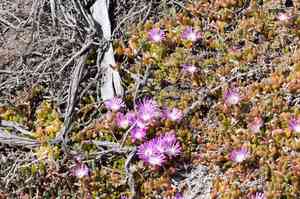
A native succulent found in seaside habitats, purple dew-plant flourishes in sandy, porous substrates and can be successfully multiplied through seeding. To grow purple dew-plant, cultivators need to acquire fresh seeds, then scatter them sparsely in a sandy potting blend, gently covering them with earth. Sustaining steady dampness without oversaturation promotes effective sprouting. After the young plants appear and become rooted, they can be moved to their permanent cultivation spots, guaranteeing they get sufficient sunlight to thrive.
Optimal Period for Purple Dew-plant Propagation
Propagation Type
Seeding
Propagation Season
Spring
Equipment for Purple Dew-plant Propagation
Seed trays
Seed trays are vital for initiating purple dew-plant from seeds. They facilitate even seed distribution and spacing, which is key for uniform germination and growth. Trays help maintain necessary humidity and temperature, leading to better germination rates.
Fine seed starting mix
A fine seed starting mix offers the right balance of drainage and moisture retention essential for purple dew-plant's seeds. The mix should be light and airy to allow delicate roots to easily penetrate and establish quickly, fostering robust initial development.
Misting bottle
A misting bottle is employed to gently irrigate purple dew-plant seeds without disturbing their position in the soil. It aids in keeping the soil consistently moist, which is critical for seed germination. Regular misting also ensures the air around the seeds remains humid, mimicking purple dew-plant's natural coastal environments.
Heat mat
A heat mat can be positioned beneath seed trays to maintain an ideal soil temperature, boosting the germination rate of purple dew-plant's seeds. Consistent warmth is especially beneficial for accelerating the germination process, particularly in cooler regions or during colder periods.
Plastic dome or cover
A plastic dome or cover fits over the seed tray, creating a miniature greenhouse effect. This tool helps sustain high humidity and a stable temperature, both crucial for successful germination of purple dew-plant seeds. The cover also safeguards the seeds from external disturbances.
How to Propagate Purple Dew-plant?
Propagation Type
Simple
How to Care for Your Newly Propagated Purple Dew-plant?
How to Care for Your Newly Propagated Purple Dew-plant?
After propagation, gradually introduce purple dew-plant to its permanent spot, ensuring it gets enough light and protection from harsh conditions. Water purple dew-plant sparingly, letting the soil dry slightly between waterings, and provide occasional feeding with a balanced, diluted fertilizer during its active growth phase.
Common Mistakes to Avoid When Propagating Purple Dew-plant
Overwatering
Excessive watering can cause root rot in purple dew-plant, as it needs well-draining soil and moderate moisture. Too much water hinders root development and increases the risk of fungal issues.
Deep planting
Planting purple dew-plant cuttings too deeply can suffocate them and decrease the chances of successful rooting. Proper air circulation is vital for root formation.
Neglecting humidity
Ignoring the requirement for a humid environment during the initial propagation stages can lead to purple dew-plant cuttings drying out, hindering their ability to establish roots.
Overlooking cleanliness
Failing to use sanitized tools and containers can introduce pathogens, impacting purple dew-plant's health and survival rate during propagation.
Tips For Propagating Purple Dew-plant
Well-draining medium
Use a well-draining propagation medium, such as a blend of sand, perlite, and potting soil, to support healthy root development for purple dew-plant.
Proper cutting technique
Cut healthy stem tip cuttings just below a node, ensuring they include one or two leaf pairs, to maximize the potential for successful rooting in purple dew-plant.
Maintaining humidity
Create a humid microclimate, for example by covering the cuttings with a plastic dome, to prevent purple dew-plant from drying out during the initial rooting phase.
Indirect light
Place purple dew-plant in bright, indirect light during propagation to encourage growth without the risk of sunburn, which is harmful to new cuttings.



