The Variableleaf pondweed Plant Advantage: Maximizing Home and Office Appeal and Wellness
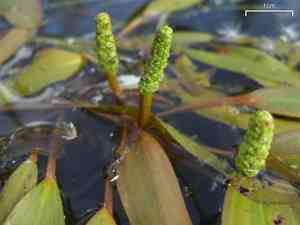
1
Variableleaf pondweed aids in enhancing water quality through the uptake of surplus nutrients.
2
This vegetation sustains aquatic organisms by offering shelter and sustenance.
3
Variableleaf pondweed is vital for securing banks and hindering soil loss.
What Makes Variableleaf pondweed Special?
Ecological Importance
A key contribution of Variableleaf pondweed is its capacity to enhance water quality. This plant takes in nutrients like nitrogen and phosphorus, often abundant from agricultural runoff and other pollutants. By doing so, it helps regulate nutrient levels, lowering the risk of harmful algal blooms that can deplete oxygen and harm aquatic life.
Habitat Provision
Variableleaf pondweed offers a vital habitat for various aquatic organisms. Fish, invertebrates, and birds depend on this plant for shelter and sustenance. Its dense growth provides a safe haven for young fish and invertebrates, shielding them from predators and strong currents. It also supplies nesting materials for some bird species, boosting local biodiversity.
How Does Variableleaf pondweed Improve Water Quality?
Nutrient Absorption
One primary way Variableleaf pondweed improves water quality is through nutrient uptake. Excessive nutrients in aquatic systems, especially nitrogen and phosphorus, can lead to eutrophicationâa process causing dense algal blooms and subsequent oxygen depletion. Variableleaf pondweed lessens these issues by absorbing these nutrients into its biomass. This prevents nutrient overload and supports the plant's growth.
Sediment Stabilization
Another way Variableleaf pondweed contributes to better water quality is by stabilizing sediments. Its roots firmly anchor into the substrate, reducing sediment resuspension from currents and wave action. This stabilization minimizes water turbidity, allowing deeper sunlight penetration, crucial for other aquatic plants and overall ecosystem productivity.
The Role of Variableleaf pondweed in Supporting Aquatic Life
Food Source
Variableleaf pondweed not only provides habitat but also serves as a food source for various aquatic organisms. Its leaves are grazed by herbivorous creatures, including certain fish and invertebrates. Additionally, its decaying matter is broken down by microorganisms, forming the base of the aquatic food web. This detritus is vital for many small aquatic species, supporting a diverse ecosystem.
Oxygen Production
Photosynthesis in aquatic plants like Variableleaf pondweed generates oxygen, essential for the survival of fish and other aerobic organisms. Variableleaf pondweed significantly contributes to oxygen levels in freshwater bodies, especially during daylight hours when photosynthetic activity peaks. This oxygenation helps maintain a healthy, balanced aquatic environment, fostering the well-being of its inhabitants.
Can Variableleaf pondweed Mitigate Shoreline Erosion?
Root Network
The intricate root network of Variableleaf pondweed plays a crucial role in stabilizing shorelines and preventing erosion. The roots help bind sediment, reducing the impact of wave action and water currents. This protection is vital for maintaining shoreline integrity and preventing land loss, which can have significant ecological and economic consequences.
Wave Attenuation
Variableleaf pondweed also helps reduce wave energy before it reaches the shore. Its dense vegetation acts as a natural barrier, absorbing and dissipating the kinetic energy of waves. This function is particularly beneficial in areas prone to heavy wave action, where erosion can be a persistent problem.
How to Cultivate and Manage Variableleaf pondweed Effectively?
Site Selection
Choosing the correct site for planting Variableleaf pondweed is crucial for its successful cultivation and management. It thrives in various water conditions but prefers areas with moderate nutrient levels and low to moderate water flow. Ensuring the site meets these conditions will optimize the plant's growth and ecological benefits.
Planting Techniques
Effective planting techniques are essential for establishing Variableleaf pondweed in new areas. It can be planted using vegetative fragments or by transplanting whole plants from donor sites. Ensuring the plant is well-anchored in the substrate is key to its survival and growth. Regular monitoring and management, such as controlling invasive species that might compete with Variableleaf pondweed, are also important for maintaining healthy populations.



